
Apo B Test (Apolipoprotein B) To Assess Cardiovascular Disease Risk
The Apo B test checks a protein linked to heart health. It helps assess the risk of heart disease by measuring this important blood marker. Understanding your Apo B levels can guide heart-healthy choices.
Apo B Test
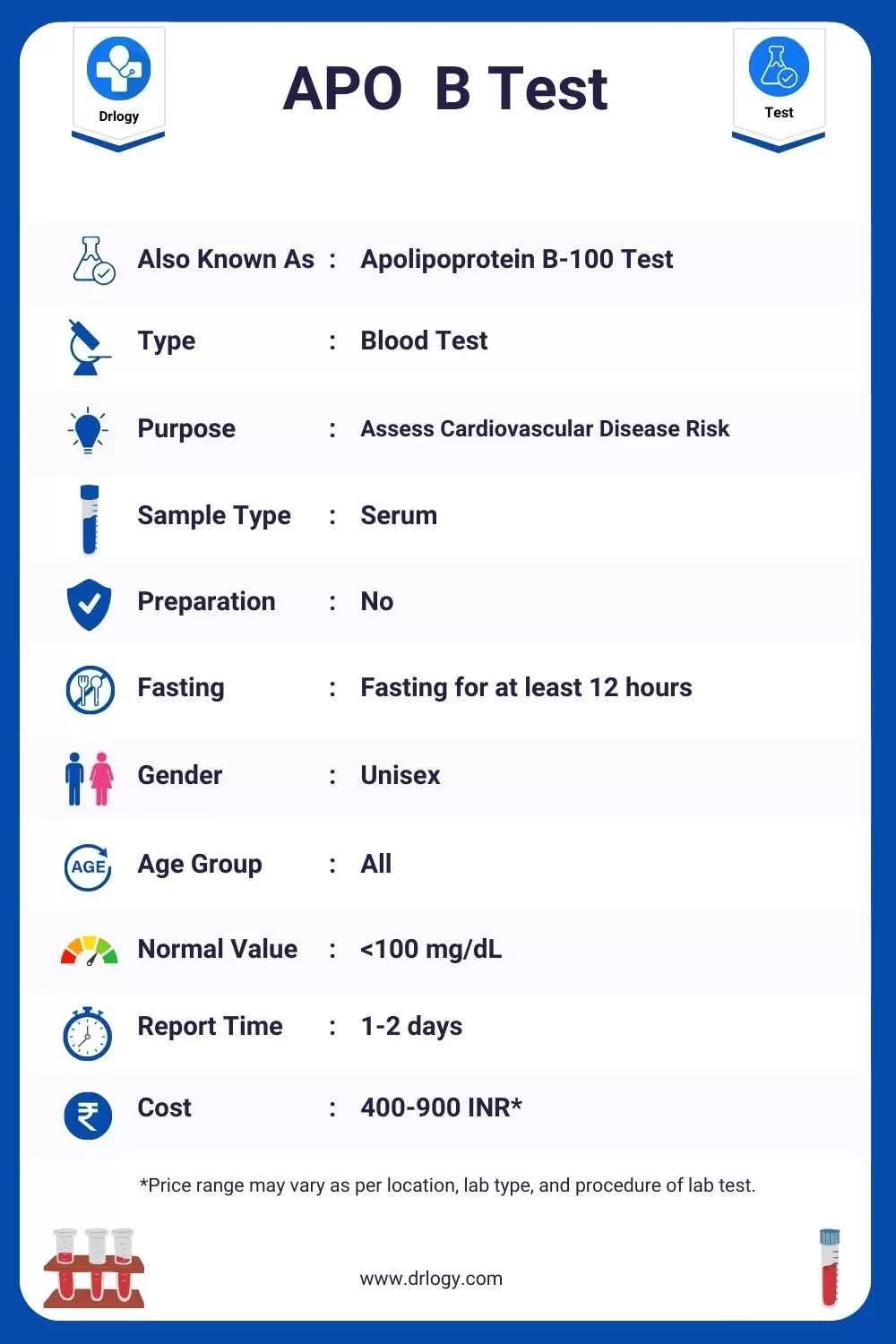
Here are the basic details of the Apo B Test.
| Also Known As | Apolipoprotein B-100 Test |
| Type | Blood Test |
| Purpose | Assess Cardiovascular Disease Risk |
| Sample Type | Serum |
| Preparation | No |
| Fasting | Fasting for at least 12 hours |
| Gender | Unisex |
| Age Group | All |
| Normal Value | <100 mg/dL |
| Reporting Time | 1-2 days |
| Cost | 400-900 INR* |
*Price range may vary as per location, lab type, and procedure of lab test.
Apo B Test Means
Apo B Test measures Apolipoprotein B-100 in the blood, linked to cardiovascular health.
- Helps assess the risk of heart disease based on Apo B levels.
- Evaluates the efficiency of lipid transport in the body.
- Typically, fasting for 12 hours before the test is recommended.
- Results guide lifestyle choices to lower risk and promote heart health.
Apo B Test Purpose
The purpose of the Apo B Test is to:
- Assess cardiovascular risk by measuring Apo B-100 levels in the blood.
- Evaluate lipid transport efficiency in the body using Apo B.
- Determine the effectiveness of heart disease prevention strategies.
- Monitor the impact of cholesterol management and lifestyle changes.
- Offer guidance for personalized heart-healthy choices based on test results.
Apo B Test Preparation
Here is the basic preparation for the Apo B Test.
Before Test
- Check if fasting is required (typically 12 hours without food).
- Inform the healthcare provider about medications or supplements you're taking.
- Stay hydrated to make the blood draw easier.
During Test
- A blood sample is drawn from a vein in your arm.
- You might feel a slight prick or pinch during the blood draw.
- Remain still and follow the instructions of the phlebotomist.
After Test
- You can resume regular activities and diet post-test.
- Be prepared to discuss results with your healthcare provider.
- Follow any additional instructions given by your healthcare provider.
Apo B Test Procedure
Here is the basic Apo B Test Procedure.
- Blood sample collected from a vein in your arm.
- Sample sent to a laboratory for analysis.
- Apo B-100 levels measured in the blood.
- Results used to assess cardiovascular disease risk.
- Interpretation and recommendations provided by healthcare provider.
Apo B Test Result
- Elevated Apo B levels indicate higher cardiovascular disease risk.
- Lower levels are generally associated with reduced risk.
- Results are discussed with a healthcare provider for personalized guidance.
Apo B Test Normal Range
Here is the normal range of the Apo B Test.
| Test | Normal Range |
|---|---|
| Apo B Test | Less than 100 mg/dL of blood |
Apo B Test Interpretation
Here is the Interpretation of the Apo B Test.
| Apo B Level | Interpretation |
|---|---|
| Less than 100 mg/dL | Generally considered within the normal/healthy range. |
| 100 - 130 mg/dL | May indicate a slightly increased cardiovascular risk. |
| More than 130 mg/dL | Suggests an elevated risk of cardiovascular disease. |
Apo B levels under 100 mg/dL are typically considered normal, while higher levels may indicate an increased risk of cardiovascular disease.
Apo B Test High Levels
| Possible Causes | Effects |
|---|---|
| Diet and Lifestyle Choices | High-fat diets, sedentary lifestyle, and obesity. |
| Genetic Factors | Inherited genetic conditions affecting lipid metabolism. |
| Medications and Health Conditions | Certain drugs, diabetes, hypothyroidism, and nephrotic syndrome. |
| Other Factors | Pregnancy, surgery, cirrhosis, and severe illness. |
High Apo B levels can result from factors such as diet, genetics, medications, and underlying health conditions.
Apo B Test Low Levels
| Possible Causes | Description |
|---|---|
| Genetic Factors | Rare genetic conditions causing Apo B deficiency. |
| Medications and Health Conditions | Certain drugs, malnutrition, and severe illnesses. |
| Other Factors | Weight reduction, surgery, and post-pregnancy period. |
Low Apo B levels can result from genetic factors, certain medications, and underlying health conditions like malnutrition.
Specimen Requirements For Apo B Test
Here are the specimen requirements for the Apo B Test.
| Specimen | Serum, shipped refrigerated or plasma | |
| Volume | 1 mL | |
| Container | Plain red-top tube; NMR LipoTube, lavender-top tube, or green-top tube is acceptable. | |
| Collection | Hold tube upright at room temperature for 45 minutes and allow to clot. | |
| Storage | Refrigerate | |
| Sample Stability | Temperature | Period |
| Room temperature | 1 day | |
| Refrigerated | 8 days | |
| Frozen | 14 days | |
| Freeze/thaw cycles | Stable x1 | |
| Causes for Rejection | Unspun LipoTube or unseparated plain red-top or EDTA tube; hemolysis | |
Apo B Test is Safe?
Apo B test is generally safe.
- It involves a routine blood draw.
- Minimal risk of complications.
- Consult healthcare provider for any concerns.
When Do You Get Apo B Test Results?
- Apo B test results typically available in one to two days.
- May vary depending on the laboratory and location.
- Consult your healthcare provider for precise timing.
Apo B Test Limitation
Here is the basic limitation of Apo B Test.
- Limited without considering other cardiovascular risk factors.
- Can vary among different laboratories.
- Interpretation may differ based on individual health factors.
- Lifestyle and medications can influence results.
- One-time measurement may not reflect long-term risk.
Apo B Test Risk Factors
Here are some of the risk factors of the Apo B Test.
- High LDL-C, family history, diet, sedentary lifestyle.
- Genetic factors, medication, and underlying health conditions can influence Apo B levels.
- Gender and age can impact Apo B levels.
- Diet, exercise, and lifestyle choices affect Apo B levels.
- High Apo B levels associated with increased CVD risk.
Doctor Recommendations After Apo B Test Result
Here are the Doctor's recommendations or consult a specialist after the Apo B Test.
| Apo B Result | Doctor to Consult | Reason |
|---|---|---|
| High | Cardiologist | Evaluate CVD risk |
| Normal | Primary Care | General assessment |
| Low | Primary Care | Review underlying issues |
Apo B Test Price
Here are the estimated Apo B Test Prices in India with different top cities:
| City | Price Range (INR)* |
| 500-600 | |
| 450-900 | |
| 500-600 | |
| 500-600 | |
| 300-500 | |
| 300-450 | |
| 300-500 | |
| 300-450 | |
| 300-450 | |
| 300-500 | |
| 300-450 | |
| 300-500 | |
| 300-450 | |
| 300-500 |
*Prices are approximate and vary depending on a specific laboratory or healthcare facility.
Summary
Overall, The Apo B test assesses cardiovascular risk by measuring Apolipoprotein B levels in the blood. Also check Drlogy Test for detailed information about all medical tests for patients, doctors, scholers and medical students.
Reference


