Drlogy
Healthcare organization
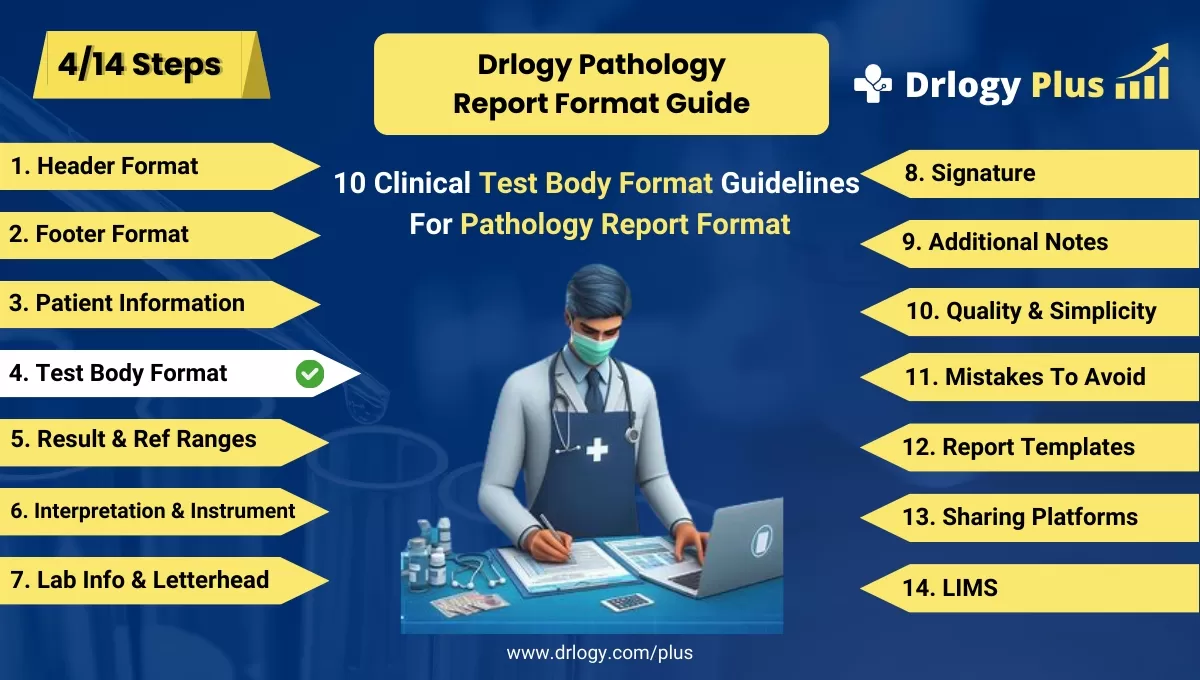
10 Clinical Test Body Format Guidelines For Pathology Report Format
Welcome to our fourth and most important blog, delving into the critical of the test body format section in pathology report design. The test body format is crucial as it organizes test results systematically, facilitating clear interpretation by healthcare providers and enabling efficient communication of diagnostic information for optimal patient care.
Recommended
According to recent studies, maintaining a standardized test body format in pathology reports significantly reduces errors and enhances clarity, ensuring accuracy in patient diagnosis. In this Drlogy Pathology Report Format Guide, we'll help to form test body format for pathology report with examples.
Top 10 Test Body Format Examples For Pathology Report Format
Here are Top 10 Test Body Format Examples For Pathology Report Format PDF.
| Pathology Test Name | Report Format PDF |
|---|---|
| CBC Test | View PDF |
| CRP Test | View PDF |
| RT PCR Test | View PDF |
| RBC Test | View PDF |
| ABC Test | View PDF |
| AMC Test | View PDF |
| Platelet Count Test | View PDF |
| ALC Test | View PDF |
| RBS Test | View PDF |
| Vitamin D Test | View PDF |
10 Quality Test Format Guidelines For Pathology Report Format
Here are 10 Quality Test Body Format Guidelines For Pathology Report Format.
| Test Format | Description |
|---|---|
| Test Title | Clearly label each test. |
| Body Format | Organize test results systematically. |
| Test Heading | Use clear headings for each test. |
| Reference Value | Include reference ranges for comparison. |
| Unit | Specify units of measurement. |
| TAT | Provide expected test turnaround time. |
| Test Method | Detail the test methodology used. |
| Sample Type | Indicate the type of sample required. |
| Print Note | Include any additional instructions. |
| Abnormal Value Indication | Highlight high and low-value indicators. |
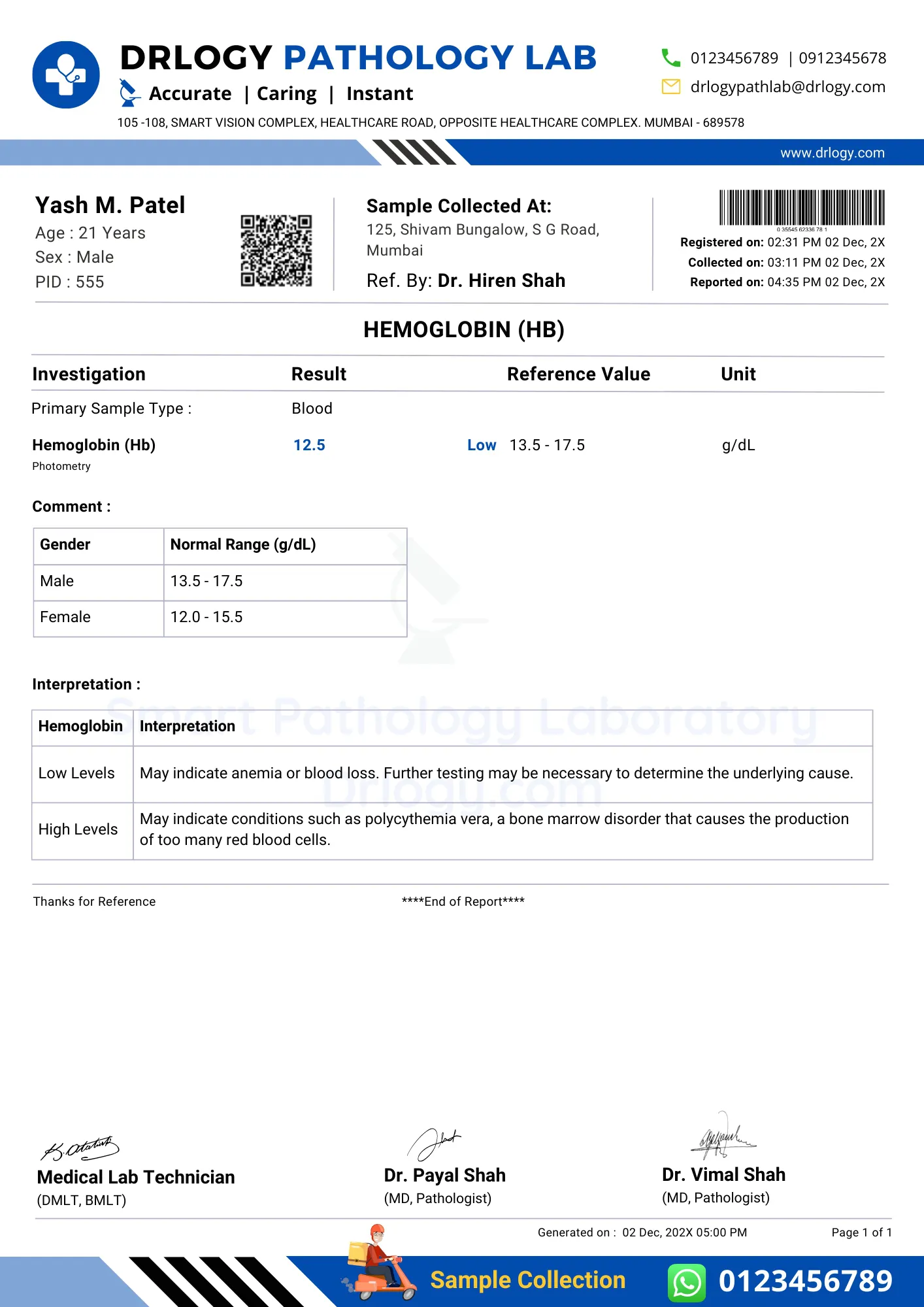
Here is a detailed description of the above Test Body Format Guidelines For Pathology Report Format.
1. Test Title:
- Clearly label each test for easyentification.
- Use standardized terminology to ensure clarity.
- Include both common and scientific names if applicable.
- Align test titles consistently throughout the report.
- Avoid abbreviations or acronyms that may cause confusion.
Example:
Hemoglobin (Hb) Test
2. Body Format:
- Organize test results systematically to enhance readability.
- Use a structured layout with clear headings and subheadings.
- Group related tests together for ease of comparison.
- Consider using tables or bullet points for concise presentation.
- Ensure consistency in formatting across all test results.
Example:
Hemoglobin (Hb) Level
3. Test Heading:
- Use clear and descriptive headings for each test.
- Include the test name and relevant parameters.
- Ensure headings are prominent and distinguishable from other text.
- Avoid overly long or convoluted headings.
- Consider using bold or larger font size for emphasis.
Example:
Hemoglobin (Hb)
4. Reference Value:
- Provide reference ranges for each test parameter.
- Include both normal and abnormal ranges if applicable.
- Ensure reference values are accurate and up-to-date.
- Specify the source of reference values if known.
- Highlight any deviations from standard reference ranges.
Example:
Hemoglobin (Hb) Normal range:
- Adult male: 13.5 - 17.5 g/dL
- Adult female: 12.5 - 16.5 g/dL
5. Test Unit:
- Specify units of measurement for test results.
- Use standardized units to ensure consistency.
- Include units for both numerical values and qualitative descriptions.
- Avoid ambiguity by using clear and unambiguous unit symbols.
- Verify units against established conventions and guidelines.
Example:
Hemoglobin (Hb): g/dL
6. TAT (Turnaround Time):
- Clearly state the expected turnaround time for each test.
- Include the time frame from sample collection to result reporting.
- Specify any factors that may affect turnaround time, such as sample type or test complexity.
- Provide accurate estimates to manage expectations effectively.
- Update TAT information regularly to reflect current lab performance.
Example:
Turnaround Time Within 1 hour
7. Test Method:
- Detail the methodology used to perform each test.
- Include information on equipment, reagents, and procedures.
- Specify any special techniques or protocols employed.
- Provide references or citations for test methods if applicable.
- Ensure consistency in describing test methods across reports.
Example:
Test Method: Hemoglobin was measured using spectrophotometry.
8. Sample Type:
- Indicate the type of sample required for each test.
- Specify collection methods and handling instructions.
- Include any special considerations for sample preparation.
- Clarify sample requirements for different age groups or patient conditions.
- Verify sample type against established protocols and guidelines.
Example:
- Sample Type: Venous blood or capillary blood.
- Sample Volume: Typically requires 1-3 mL of blood for analysis.
9. Print Note:
- Include any additional instructions or comments relevant to the test.
- Provide guidance on result interpretation or follow-up actions.
- Address any special considerations for specific patient populations.
- Clarify any abbreviations or terminology used in the report.
- Ensure that print notes are concise, relevant, and easy to understand.
Example:
- Print Note: Ensure adequate mixing of blood sample before analysis.
- Avoid hemolyzed samples as they may affect test results.
10. Abnormal Value Indication
- Clearlyentify abnormal values outside the reference range.
- Use symbols such as asterisks (*) or bold font to highlight abnormal values.
- Provide clear annotations indicating "High" or "Low" next to abnormal results.
- Include reference ranges for context in interpreting abnormal values.
- Ensure consistency in formatting to facilitate easyentification by healthcare providers
Example:
- Hb = 18.5 g/dL - High Value
- Hb = 9.2 g/dL - Low Value
10 Mistakes Should Be Avoided For Test Body Format in Pathology Report Format
Here 10 Mistakes Should Be Avoided For Test Body Format in Pathology Report Format.
- Mixing up test results, leading to confusion and misinterpretation.
- Failing to organize results systematically, hindering readability.
- Overlooking the inclusion of critical test parameters or findings.
- Using inconsistent formatting or layout across different tests.
- Omitting reference values, preventing proper comparison of results.
- Neglecting to highlight abnormal or critical findings for immediate attention.
- Including unnecessary information that clutters the report.
- Failing to update the test body format to reflect changes or advancements.
- Using ambiguous or unclearuage in describing test results.
- Ignoring quality control measures, leading to inaccuracies or errors in reporting.
Dos vs Don't For Test Body Format Section in Pathology Report Format
Here are some Dos vs Don't For Test Body Format Section in Pathology Report Format design.
| Dos | Don'ts |
|---|---|
| Organize test results logically | Clutter the report with unnecessary information |
| Use clear headings and subheadings | Mix up test results, causing confusion |
| Highlight abnormal findings for attention | Overlook critical test parameters |
| Include reference values for comparison | Use inconsistent formatting |
| Update format to reflect changes | Omit reference values for comparison |
| Provide accurate and concise descriptions | Include ambiguous or unclearuage |
| Ensure readability and clarity | Neglect to update format regularly |
| Maintain consistency in formatting | Ignore quality control measures |
| Include all relevant test parameters | Overwhelm with excessive detail |
| Follow standardized reporting guidelines | Forget to highlight abnormal findings |
Pathology Report Format Guide
Here are 14 steps guide for designing a pathology lab report format from A to Z.
Summary
In conclusion, ensuring a well-organized and clear test body section in pathology reports is essential for facilitating accurate interpretation and communication of test results. By adhering to best practices and avoiding common pitfalls, healthcare professionals can enhance the effectiveness and reliability of pathology reports for patient care.
Check Drlogy Pathology Report Format Guide For A to Z information regarding how to make proper report format structure to implementation of report format into you lab work.