Drlogy
Healthcare organization
10 Mistakes To Avoid in Pathology Report Format Design With Example
Welcome to the 11th blog focusing on the Mistakes To Avoid in pathology report format design. In crafting pathology reports, avoiding common mistakes is crucial for accuracy and credibility.
Recommended
In this Drlogy Pathology Report Format, we'll explore how, labs can effortlessly steer clear of pitfalls, ensuring precise and reliable report formatting.
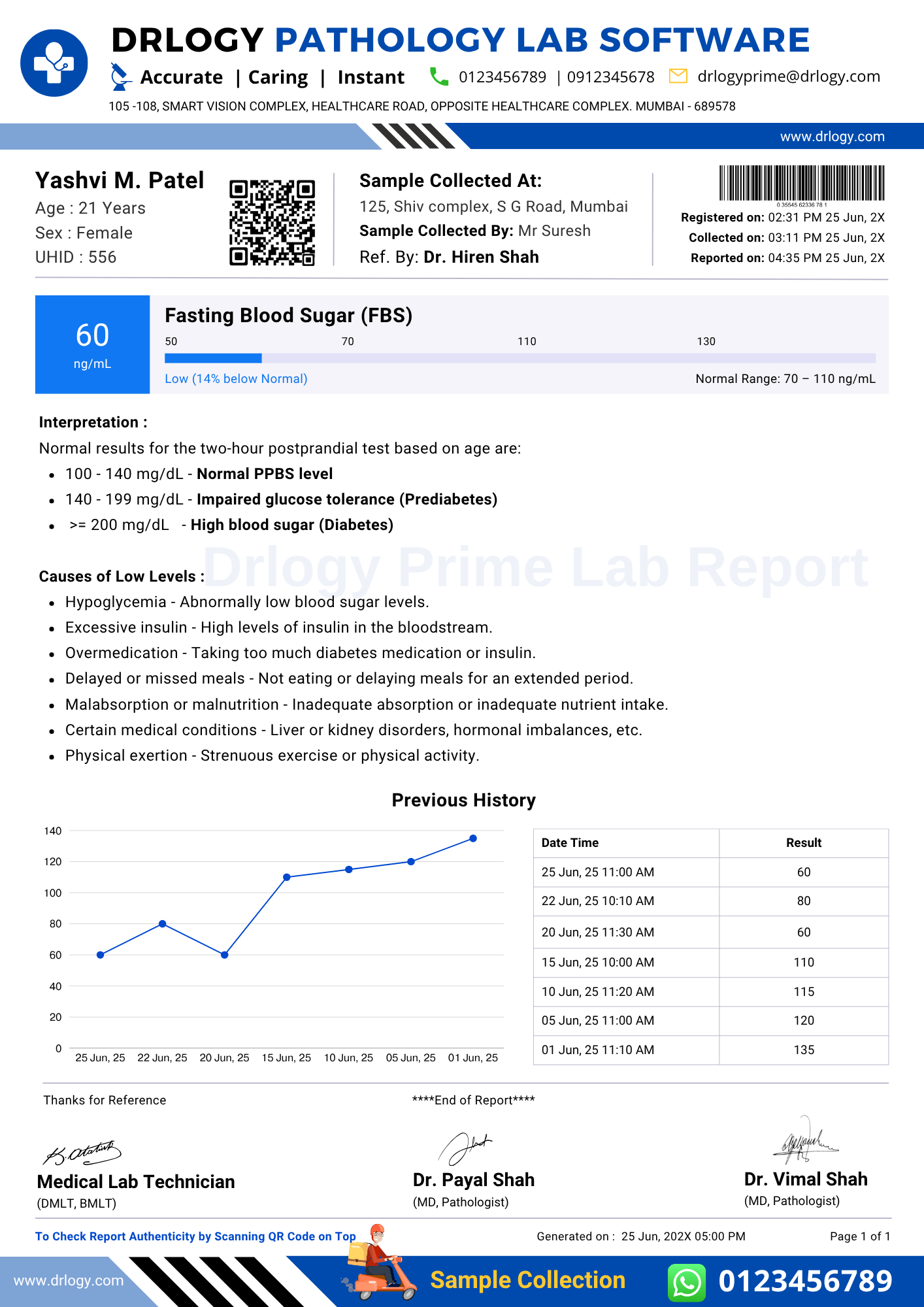
10 Mistakes To Avoid in Pathology Report Format Design
Here are 10 Mistakes To Avoid in Pathology Report Format Design With Example.
| Mistakes to Avoid | Description |
|---|---|
| Patient Information | Ensure completeness and accuracy of patient details |
| Test Results | Provide accurate and clear presentation of test results |
| Lab Branding | Maintain consistency and professionalism in branding |
| Report Authenticity | Ensure reports are genuine and trustworthy |
| Test Methodology | Use reliable and standardized testing methodologies |
| Regulatory Compliance | Adhere to relevant regulations and guidelines |
| Poor Data Presentation | Ensure clarity and effectiveness in data presentation |
| Report Format | Maintain consistency and simplicity in report format |
| Quality Control | Implement thorough quality control measures |
| Sharing | Ensure secure and appropriate sharing of reports |
1. Patient Information:
- Double-check patient details for accuracy and completeness.
- Ensure all relevant information such as name, age, and gender is included.
- Avoid missing or incorrect patiententifiers.
- Cross-verify patient information with the referral sources.
- Implement protocols for updating and verifying patient data regularly.
2. Test Results:
- Verify the accuracy and consistency of test results.
- Present results in a clear and understandable format.
- Include reference ranges and units for interpretation.
- Avoid misinterpretation or ambiguity in result reporting.
- Ensure timely communication of critical or abnormal findings.
3. Lab Branding:
- Maintain consistent branding across all reports and communications.
- Ensure lab logo and name are prominently displayed.
- Avoid inconsistencies in branding elements such as colors and fonts.
- Align branding with the lab's image and values.
- Ensure professionalism and credibility in all branding materials.
4. Report Authenticity:
- Implement measures to prevent tampering or unauthorized access to reports.
- Use secure authentication methods for report access.
- Ensure reports are generated and signed by authorized personnel.
- Avoid the dissemination of falsified or unauthorized reports.
- Maintain a clear audit trail to track report access and modifications.
5. Test Methodology:
- Standardize testing methodologies to ensure reliability and accuracy.
- Document and adhere to validated testing procedures.
- Provide clear explanations of the testing process and methodology.
- Avoid using outdated or unvalidated testing techniques.
- Stay abreast of advances in diagnostic technology and update methodologies accordingly.
6. Regulatory Compliance:
- Familiarize yourself with relevant regulations and guidelines.
- Ensure compliance with local, national, and international regulations.
- Maintain accurate records and documentation to demonstrate compliance.
- Seek guidance from regulatory authorities or legal experts when uncertain.
- Regularly review and update policies and procedures to align with regulatory changes.
7. Poor Data Presentation:
- Organize data in a logical and easy-to-follow manner.
- Use clear headings and formatting to distinguish different sections.
- Avoid clutter and excessive information that may overwhelm the reader.
- Ensure consistency in formatting and throughout the report.
- Incorporate visual aids such as tables and graphs when necessary for clarity.
8. Report Format:
- Choose a standardized format for pathology reports.
- Ensure consistency in layout and structure across all reports.
- Use headings, subheadings, and bullet points to organize information.
- Avoid overly complex or convoluted report formats.
- Optimize readability by using appropriate fonts and sizes.
9. Quality Control:
- Establish robust quality control measures for report generation.
- Implement procedures to verify the accuracy and reliability of test results.
- Regularly calibrate equipment and validate testing methodologies.
- Conduct proficiency testing and internal audits to monitor quality.
- Address any deviations or errors promptly and transparently.
10. Sharing:
- Ensure secure and appropriate sharing of pathology reports.
- Follow data protection regulations and patient privacy guidelines.
- Use encrypted channels for transmitting sensitive information.
- Obtain patient consent before sharing reports with third parties.
- Educate staff on the importance of confidentiality and data security.
Dos vs Don't For Mistakes To Avoid For Pathology Report Format
Here are Dos vs Don't For Mistakes To Avoid For Pathology Report Format.
| Dos | Don'ts |
|---|---|
| Verify and ensure accuracy of patient information | Neglect to verify patient information |
| Double-check test results for accuracy and consistency | Overlook discrepancies in test results |
| Maintain consistent branding across all reports | Use inconsistent branding elements |
| Implement security measures to ensure report authenticity | Share reports without proper authentication |
| Follow validated testing methodologies | Use outdated or unvalidated testing methods |
Pathology Report Format Guide
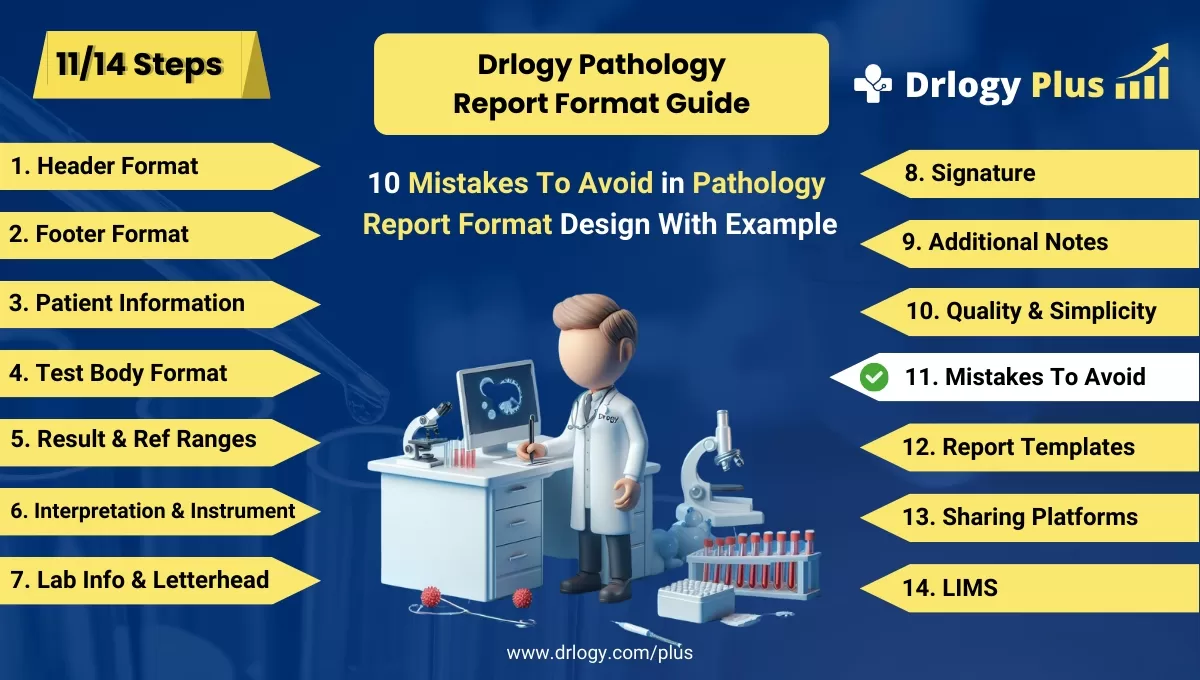
Here are 14 steps guide for designing a pathology lab report format from A to Z.
Summary
Overall, adhering to dos while avoiding don'ts in pathology report formatting ensures accuracy, consistency, and credibility, facilitating effective patient care and diagnostic decision-making. By prioritizing these guidelines, healthcare professionals can maintain the integrity and reliability of pathology reports for optimal patient outcomes.
Check Drlogy Pathology Report Format Guide For A to Z information regarding how to make proper report format structure to implementation of report format into you lab work.