Drlogy
Healthcare organization
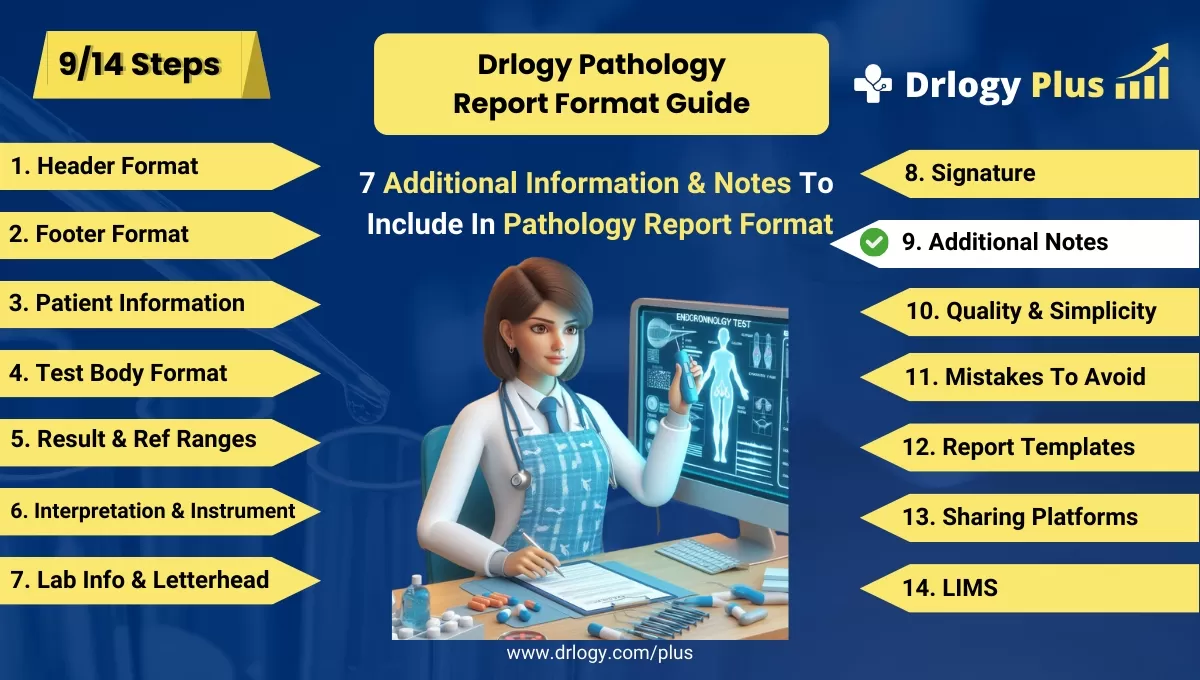
7 Additional Information & Notes To Include In Pathology Report Format
Welcome to the 9th blog focusing on the Additional Info & Notes section of pathology report format design. The Additional Information & Notes section in pathology reports provides crucial context, clarifications, and supplementary details, enhancing the overall understanding and interpretation of test results for healthcare professionals and patients alike.
Recommended
In this Drlogy Pathology Report Format, we'll explore Its proper utilization ensures comprehensive and accurate communication, aiding in informed decision-making and patient care.
7 Additional Information & Notes To Include In Pathology Report Format
Here are 7 Additional Information & Notes To Include In Pathology Report Format.
| Additional Information & Notes | Description |
|---|---|
| Test Notes | Specific notes related to the test conducted |
| Comments | Additional comments or observations |
| Related Test | Mention of related tests or additional investigations |
| Government Guidelines | Compliance with relevant government regulations |
| Patient Education Material | Educational resources provided to patients |
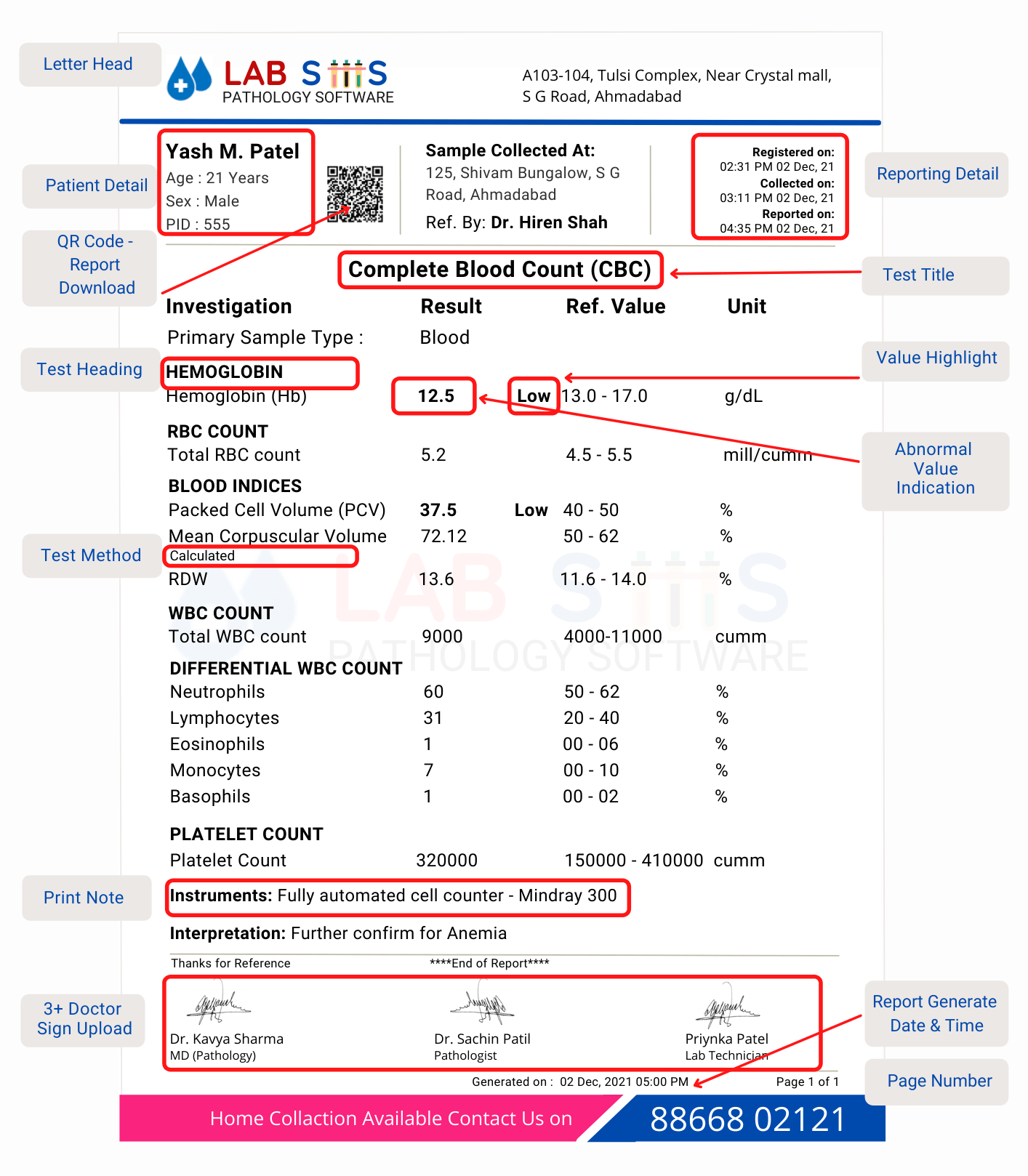
| Home Collection Service | Information on home sample collection services |
| Marketing Material | Promotional material or offers provided |
1. Test Notes:
- Include any specific details or observations related to the test conducted.
- Provide information on sample collection methods or special considerations.
- Note any deviations from standard procedures or unexpected findings.
- Ensure clarity and conciseness in presenting test-related notes.
- Use standardized terminology and abbreviations for consistency.
2. Comments:
- Add any additional comments or observations relevant to the test results.
- Include clinical insights or recommendations based on the findings.
- Address any concerns or questions raised during the testing process.
- Ensure comments are clear, concise, andectly related to the test outcomes.
- Provide context or explanations for abnormal or unexpected results.
3. Related Test:
- Mention any related tests or additional investigations performed.
- Provide cross-references to related test results or diagnostic procedures.
- Ensure consistency in documenting related tests across reports.
- Include relevant information on the rationale for ordering related tests.
- Highlight any dependencies or implications of related test results.
4. Government Guidelines:
- Ensure compliance with relevant government regulations and guidelines.
- Provide references to specific regulatory standards or requirements.
- Include information on any mandatory reporting obligations.
- Ensure transparency in adhering to government-mandated protocols.
- Regularly update protocols and procedures to align with evolving regulations.
5. Patient Education Material:
- Offer educational resources or materials to enhance patient understanding.
- Provide information on medical conditions, procedures, or treatment options.
- Ensure patient education materials are accurate, reliable, and easy to understand.
- Include resources for further reading or additional support.
- Tailor educational materials to the specific needs and preferences of patients.
6. Home Collection Service:
- Provide details about home sample collection services offered by the laboratory.
- Include information on scheduling, sample collection procedures, and fees.
- Ensure clear communication regarding sample transport and storage requirements.
- Address any patient concerns or questions related to home collection.
- Highlight the convenience and benefits of home sample collection for patients.
7. Marketing Material:
- Include promotional material or offers provided by the laboratory.
- Communicate any special promotions, discounts, or packages available.
- Ensure transparency and accuracy in marketing communications.
- Provide clear instructions or contact information for patients interested in learning more.
- Align marketing material with the lab's branding and messaging strategies.
10 Mistakes Avoided For Additional Information & Notes Section
Here are 10 Mistakes Avoided For Additional Information & Notes For Pathology Report Format.
- Including irrelevant or unnecessary information that may confuse or distract from the main findings.
- Failing to provide clear and concise explanations for any additional notes or comments.
- Neglecting to cross-reference or validate any related tests or diagnostic procedures mentioned.
- Disregarding government guidelines or regulations when including additional information.
- Using patient education material that is inaccurate or misleading.
- Offering home collection services without ensuring proper sample handling and transportation protocols.
- Including marketing material that may compromise the professionalism or integrity of the report.
- Failing to differentiate between test notes and comments, leading to confusion for the reader.
- Providing too much information in the report, leading to information overload for the recipient.
- Neglecting to update or review additional information regularly to ensure relevance and accuracy.
Dos vs Don't For Additional Information & Notes Section
Here are Dos vs Don't For Additional Information & Notes Section For Pathology Report Format.
| Dos | Don'ts |
|---|---|
| Include relevant and informative additional notes | Include irrelevant or confusing additional information |
| Ensure clarity and conciseness in explanations | Provide unclear or lengthy explanations |
| Cross-reference and validate related tests | Neglect to cross-reference or validate related tests |
| Adhere to government guidelines and regulations | Disregard government guidelines or regulations |
| Use accurate and trustworthy patient education material | Use inaccurate or misleading patient education material |
Pathology Report Format Guide
Here are 14 steps guide for designing a pathology lab report format from A to Z.
Summary
Overall,the additional information and notes section of pathology reports should prioritize relevance, clarity, and adherence to regulations, enhancing the report's comprehensibility and reliability for effective patient care and decision-making.
Check Drlogy Pathology Report Format Guide For A to Z information regarding how to make proper report format structure to implementation of report format into you lab work.