Drlogy
Healthcare organization
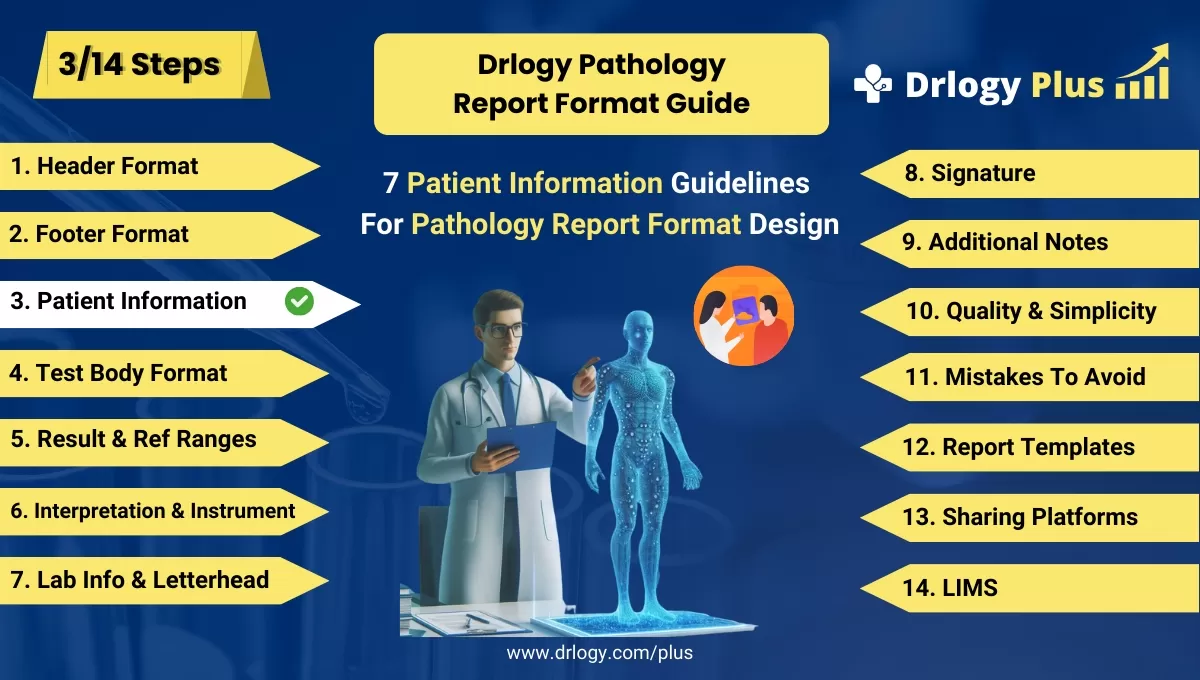
7 Patient Information Guidelines For Pathology Report Format Design
Welcome to the third blog focusing on the Patient Information section of pathology report format design,which is part of herader section. patient information guidelines ensure accurateentification and confidentiality, essential for providing personalized and effective healthcare interventions.
Recommended
In this Drlogy Pathology Report Format, we'll examine the importance of patient information guidelines, ensuring accurateentification and confidentiality for personalized healthcare interventions.
7 Things Mentioned in Patient Information Section For Pathology Report Format
Here are the 7 Key things that should be mentioned in the Patient Information Section For Pathology Report Format that helps patients and doctors.
| Patient Information | Description |
|---|---|
| Patient Prefix | Title or honorific used before patient's name. |
| Name | Full name of the patient. |
| Gender | Biological sex of the patient. |
| Age | Age of the patient at the time of the report. |
| UHID (Unique Hospital) | Uniqueentifier assigned to the patient. |
| Address | Patient's residential or mailing address. |
| Contact No | Phone number to reach the patient. |

Check Patient Information Guidelines from the below details using the above report format.
1. Patient Prefix:
- Include titles such as Mr. or Mrs. before the patient's name.
- Tailor the prefix based on the patient's preference and cultural norms.
- Ensure accuracy in prefix usage to address the patient respectfully.
- Omit the prefix if the patient prefers not to use one.
- Verify the prefix against patient records for consistency.
2. Patient Name:
- Enter the patient's full legal name as per officialentification.
- Use standard naming conventions, avoiding nicknames or abbreviations.
- Double-check spelling to ensure accuracy in patiententification.
- Include middle names or initials if applicable.
- Align the name with other medical records for consistency.
3. Gender:
- Indicate the patient's biological sex as male, female, or other.
- Respect the patient's self-identified genderentity if provided.
- Use terminology sensitive to gender diversity and inclusivity.
- Document any genderentity preferences specified by the patient.
- Confirm gender information with the patient for accuracy.
4. Age:
- Record the patient's age at the time of the report in years.
- Calculate age accurately based on the patient's date of birth or provided information.
- Specify age in whole numbers, rounding up or down as appropriate.
- Update age information with each new report or encounter.
- Cross-reference age with other demographic data for consistency.
5. UHID (Unique Hospital):
- Assign a uniqueentifier to each patient for accurate record-keeping.
- Ensure the UHID is distinct and not shared with other patients.
- Use standardized formats for UHID creation and management.
- Protect patient confidentiality by safeguarding UHID information.
- Verify UHID against patient records to avoid duplication or errors.
6. Address:
- Capture the patient's current residential or mailing address.
- Include details such as street name, city, state, and postal code.
- Update address information regularly to reflect any changes.
- Respect patient privacy by securely storing and transmitting address data.
- Cross-reference address details for accuracy and completeness.
7. Contact No:
- Document a reliable phone number to reach the patient or their designated contact.
- Include area code and country code for international calls if applicable.
- Verify contact numbers with the patient to ensure accuracy.
- Obtain permission before sharing contact information with third parties.
- Securely store and handle contact details in compliance with data protection regulations.
Top 10eal Pathology Report Format Examples For Patient Information
Here are the Top 10eal Pathology Report Format Examples For Patient Information.
| Test Name | Report Format |
| RBS Test | View PDF |
| Ferritin Test | View PDF |
| FNAC Test | View PDF |
| VDRL Test | View PDF |
| Triple Marker Test | View PDF |
| Double Marker Test | View PDF |
| Widal Test | View PDF |
| Semen Analysis Test | View PDF |
| Vitamin K Test | View PDF |
| Troponin Test | View PDF |
10 Mistakes That Must Avoid For Patient Information in Pathology Report Format
Here are 10 Mistakes That Must Avoid For Patient Information in Pathology Report Format.
- Misspelling or inaccurately recording the patient's name.
- Omitting essential patient details such as gender or age.
- Using inappropriate titles or prefixes without patient preference.
- Failing to update patient information for each report or encounter.
- Neglecting to verify patiententifiers against official records.
- Including outdated or incorrect contact information.
- Sharing patient information without obtaining proper consent.
- Using non-standard or ambiguous abbreviations in patient records.
- Storing patient data insecurely, risking privacy breaches.
- Ignoring patient preferences regarding genderentity or privacy concerns.
Dos vs Don't For Patient Information Section in Pathology Report Format
Here are Dos vs Don't For Patient Information Section in Pathology Report Format.
| Do | Don't |
|---|---|
| Verify patiententifiers for accuracy. | Assume patient details without verification. |
| Respect patient privacy and confidentiality. | Share patient information without consent. |
| Use standardized naming conventions. | Use non-standard abbreviations or nicknames. |
| Update patient information regularly. | Neglect to update patient details as needed. |
| Ensure clarity and accuracy in recording. | Overlook misspellings or inaccuracies. |
Pathology Report Format Guide
Here are 14 steps guide for designing a pathology lab report format from A to Z.
Summary
Overall, proper patient information guidelines ensures accurateentification, respects privacy, and enhances trust between healthcare providers and patients, ultimately improving the quality of care and patient outcomes.
Check Drlogy Pathology Report Format Guide For A to Z information regarding how to make proper report format structure to implementation of report format into you lab work.