Drlogy
Healthcare organization
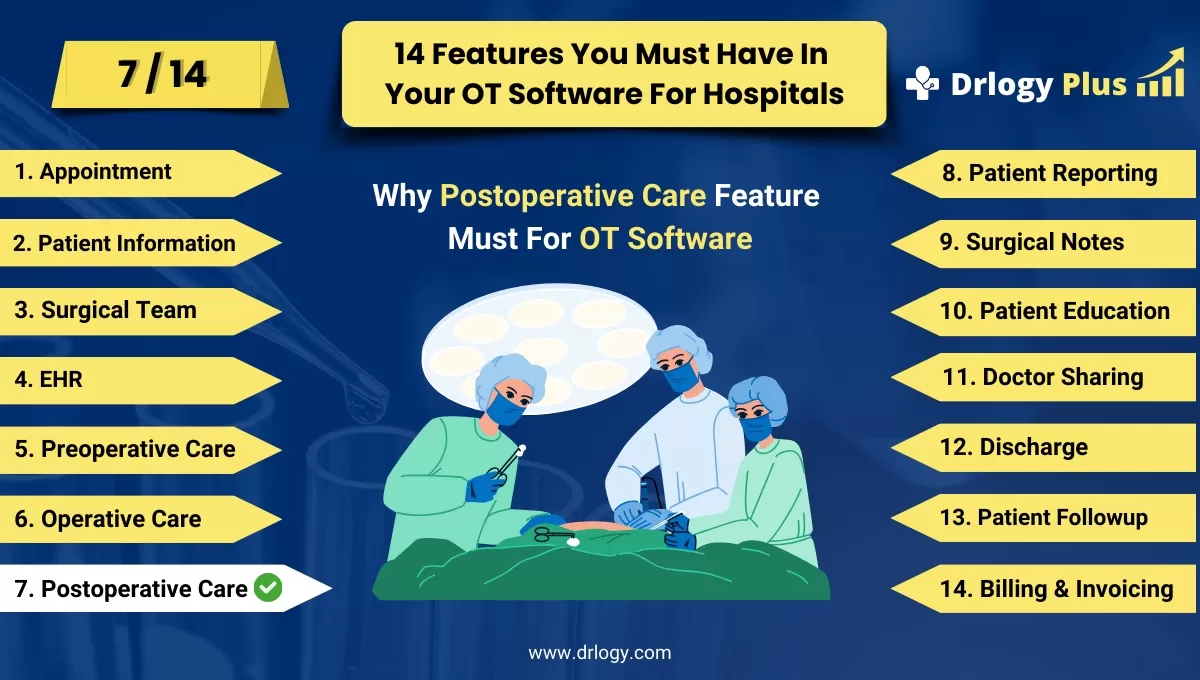
Why Postoperative Care Management Feature Must In OT Software
Postoperative care management features in OT software are essential for monitoring patient recovery and preventing complications.
Check:
They ensure continuity of care, enhance patient safety, and support effective communication among healthcare providers, leading to better patient outcomes and satisfaction.
Check:
10 Best Postoperative Care Management Features for OT Management Software
Check 10 Best Postoperative Care Management Features for OT Management Software.
1. Patient Monitoring
- Vital Sign Tracking: Continuously monitor and record vital signs such as heart rate, blood pressure, and oxygen saturation postoperatively.
- Automated Alerts: Set up automated alerts for any deviations from normal vital sign ranges to ensure timely intervention.
- Remote Monitoring: Enable remote monitoring capabilities for patients in recovery to facilitate early discharge and home care.
- Data Integration: Integrate monitoring data with the patient's electronic health record for seamless access and review.
- Trend Analysis: Use trend analysis tools toentify patterns and potential complications early.
2. Pain Management
- Pain Assessment Tools: Implement standardized tools for assessing patient pain levels regularly.
- Medication Management: Track and manage postoperative pain medications, ensuring proper dosage and timing.
- Non-Pharmacological Interventions: Document and provide options for non-pharmacological pain relief methods such as physical therapy and relaxation techniques.
- Patient Feedback: Collect and analyze patient feedback on pain management effectiveness to adjust treatment plans.
- Compliance Monitoring: Ensure compliance with pain management protocols and document all interventions.
3. Wound Care Management
- Wound Assessment: Conduct and document regular wound assessments to monitor healing progress and detect any signs of infection.
- Dressing Changes: Schedule and record dressing changes, ensuring adherence to sterile techniques.
- Photographic Records: Maintain photographic records of wound healing to provide visual documentation over time.
- Wound Care Instructions: Provide clear, written wound care instructions to patients and caregivers for at-home care.
- Specialist Referrals: Facilitate referrals to wound care specialists when necessary for advanced care.
4. Medication Management
- Medication Reconciliation: Perform thorough medication reconciliation to avoid errors in postoperative prescriptions.
- Automated Reminders: Set up automated reminders for patients to take their medications as prescribed.
- Side Effect Monitoring: Monitor and document any side effects or adverse reactions to postoperative medications.
- Dosage Adjustments: Make necessary dosage adjustments based on patient response and clinical guidelines.
- Prescription Refills: Simplify the process for patients to request and receive prescription refills.
5. Rehabilitation and Physical Therapy
- Individualized Rehab Plans: Develop and document individualized rehabilitation plans tailored to each patient’s needs.
- Progress Tracking: Track and document patient progress through various stages of rehabilitation.
- Exercise Programs: Provide access to guided exercise programs and instructional videos to support patient recovery.
- Therapist Collaboration: Facilitate collaboration and communication between surgeons and physical therapists.
- Patient Education: Offer comprehensive education on the importance of rehabilitation and how to perform exercises correctly.
6. Discharge Planning
- Discharge Summaries: Create detailed discharge summaries that include all relevant postoperative information and instructions.
- Follow-up Appointments: Schedule and track follow-up appointments to ensure ongoing care and monitoring.
- Home Care Instructions: Provide clear, comprehensive instructions for home care, including medication, wound care, and activity restrictions.
- Patient Resources: Offer resources and contact information for support services such as home health care and patient support groups.
- Readmission Prevention:entify and address factors that could lead to hospital readmission, ensuring preventive measures are in place.
7. Patient Education
- Educational Materials: Provide patients with educational materials about their procedure, recovery process, and postoperative care.
- Interactive Learning: Use interactive tools and videos to enhance patient understanding and engagement.
- Language Options: Offer educational content in multipleuages to accommodate diverse patient populations.
- Questionnaires: Implement pre- and post-education questionnaires to assess patient comprehension and retention of information.
- Support Channels: Establish support channels such as helplines or chat services for patients to ask questions and receive guidance.
8. Infection Control
- Infection Monitoring: Monitor for signs and symptoms of infection and document findings in the patient’s record.
- Antibiotic Stewardship: Implement antibiotic stewardship programs to ensure appropriate use of antibiotics postoperatively.
- Isolation Protocols: Establish protocols for isolating and managing patients with postoperative infections.
- Hygiene Education: Educate patients and caregivers on proper hygiene practices to prevent infections.
- Infection Audits: Conduct regular infection control audits toentify and address potential issues.
9. Psychological Support
- Mental Health Screening: Screen patients for signs of anxiety, depression, or other psychological issues related to their surgery.
- Counseling Services: Provide access to counseling and mental health services to support patients through their recovery.
- Support Groups: Facilitate support groups where patients can share their experiences and receive peer support.
- Stress Management: Offer stress management resources such as relaxation techniques and coping strategies.
- Family Involvement: Encourage family involvement in the recovery process to provide additional emotional support.
10. Postoperative Follow-up
- Regular Check-ins: Schedule regular postoperative check-ins via phone, video calls, or in-person visits to monitor recovery.
- Outcome Tracking: Track and document patient outcomes to assess the success of the surgery and postoperative care.
- Complication Management:entify and manage any postoperative complications promptly to prevent further issues.
- Patient Satisfaction Surveys: Conduct patient satisfaction surveys to gather feedback on their postoperative care experience.
- Continuous Improvement: Use feedback and data from follow-up visits to continuously improve postoperative care protocols and practices.
Drlogy OT Management Software Features Guide
Here are 14 features of Operation Theatre (OT) Management Software for hospitals.
| 1. Appointment | 8. Patient Reporting |
| 2. Patient Information | 9. Surgical Notes |
| 3. Surgical Team | 10. Patient Education |
| 4. EHR | 11. Doctor Sharing |
| 5. Preoperative Checklists | 12. Discharge |
| 6. Operative Preparation | 13. Patient Followup |
| 7. Postoperative Care | 14. Billing and Invoicing |
Summary
Overall, Postoperative care management features in OT software facilitate comprehensive monitoring and support, ensuring patient recovery, and reducing complications, thus enhancing overall patient satisfaction and outcomes.
Check Drlogy OT Management Software Features Guide for efficient inpatient management and enhanced patient care for your clinics and hospitals for patient management.