Drlogy
Healthcare organization
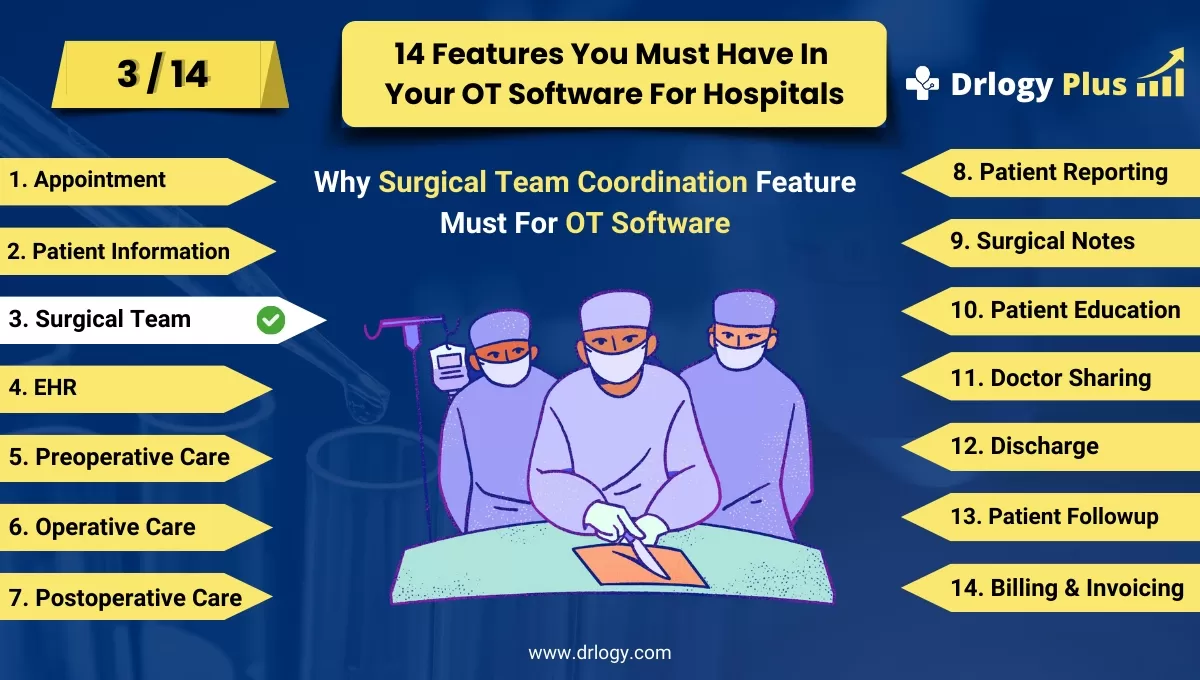
Why Surgical Team Coordination Feature Must In OT Management Software
Surgical Team Coordination feature in OT management software facilitates seamless collaboration among surgical team members, optimizing workflow efficiency within hospital operating theaters.
Check:
By streamlining team coordination, hospitals can minimize errors, maximize productivity, and deliver high-quality care during surgical procedures.
Check:
10 Best Surgical Team Coordination Feature For OT Management Software
Check 10 Best Surgical Team Coordination Feature For OT Management Software.
1. Assignment and Management
- Easily assigns to surgical team members for each procedure.
- Ensure clear distribution of responsibilities among surgeons, anesthetists, nurses, and support staff.
- Customize assignments based on the specific needs of each surgery.
- Enhance team efficiency and collaboration with well-defineds.
- Reduce the likelihood of errors and miscommunications during surgeries.
2. Real-Time Notifications and Alerts
- Send real-time notifications to team members about schedule changes or updates.
- Ensure all team members are informed about their duties and any changes.
- Use multiple communication channels, such as email, SMS, or in-app alerts.
- Improve responsiveness and coordination among the surgical team.
- Minimize delays and disruptions during surgical procedures.
3. Shared Surgical Calendars
- Provide a shared calendar view accessible to all team members.
- Display scheduled surgeries, team assignments, and availability.
- Allow team members to view their upcoming duties and prepare accordingly.
- Facilitate better planning and time management within the team.
- Enhance transparency and communication among team members.
4. Team Availability Tracking
- Track the availability of surgical team members in real-time.
- Identify potential conflicts or overlaps in team schedules.
- Automatically suggest available team members for new surgeries.
- Ensure optimal utilization of staff resources.
- Reduce scheduling conflicts and improve overall efficiency.
5. Task Management and Checklists
- Assign specific tasks to team members with detailed checklists.
- Ensure all preoperative, intraoperative, and postoperative tasks are completed.
- Track task completion status andentify any pending items.
- Enhance accountability and ensure thorough preparation for surgeries.
- Improve patient safety and surgical outcomes.
6. Communication and Collaboration Tools
- Provide integrated communication tools, such as messaging and video conferencing.
- Enable seamless collaboration and information sharing among team members.
- Allow for quick consultations and decision-making during surgeries.
- Facilitate remote collaboration with specialists if needed.
- Enhance team coordination and patient care quality.
7. Detailed Team Rosters
- Maintain detailed rosters of all surgical team members, including qualifications and specialties.
- Ensure the right mix of skills and expertise for each surgery.
- Easily update and manage team rosters as needed.
- Enhance the flexibility and adaptability of the surgical team.
- Improve the matching of team members to specific surgical requirements.
8. Training and Credential Management
- Track the training, certifications, and credentials of surgical team members.
- Ensure all team members meet the required qualifications for theirs.
- Schedule regular training sessions and certification renewals.
- Maintain compliance with healthcare regulations and standards.
- Enhance the skills and competencies of the surgical team.
9. Conflict Resolution and Escalation Protocols
- Implement protocols for resolving conflicts and escalating issues within the team.
- Ensure timely intervention and resolution of any team-related problems.
- Provide clear guidelines for handling disputes or disagreements.
- Maintain a positive and collaborative team environment.
- Improve team dynamics and overall performance.
10. Performance Analytics and Feedback
- Generate performance reports and analytics for surgical team members.
- Track key metrics such as efficiency, adherence to protocols, and patient outcomes.
- Provide regular feedback to team members for continuous improvement.
- Identify areas for additional training or support.
- Enhance the overall performance and effectiveness of the surgical team.
Drlogy OT Management Software Features Guide
Here are 14 features of Operation Theatre (OT) Management Software for hospitals.
| 1. Appointment | 8. Patient Reporting |
| 2. Patient Information | 9. Surgical Notes |
| 3. Surgical Team | 10. Patient Education |
| 4. EHR | 11. Doctor Sharing |
| 5. Preoperative Checklists | 12. Discharge |
| 6. Operative Preparation | 13. Patient Followup |
| 7. Postoperative Care | 14. Billing and Invoicing |
Summary
Overall, Centralizing patient information in OT management software enhances surgical decision-making and patient safety, optimizing care delivery within hospital operating theaters.
Check Drlogy OT Management Software Features Guide for efficient inpatient management and enhanced patient care for your clinics and hospitals for patient management.