Drlogy
Healthcare organization
Why Patient Information Feature Must In OT Management Software
The Patient Information feature in OT management software centralizes and digitizes critical health data, ensuring efficient access and management of patient records within hospital operating theaters.
Check:
By enhancing patient information management, hospitals can improve surgical outcomes, reduce errors, and enhance overall patient safety during procedures.
Check:
10 Best Patient Information Feature For OT Management Software
Check 10 Best Patient Information Feature For OT Management Software.
1. Centralized Patient Records
- Consolidate all patient information into a single, easily accessible database.
- Allow authorized staff to quickly retrieve patient records.
- Reduce duplication of records and ensure data consistency.
- Enhance communication and coordination among different departments.
- Improve overall efficiency in managing patient information.
2. Real-Time Data Updates
- Ensure patient information is updated in real-time across the system.
- Provide the latest patient data to all relevant staff members instantly.
- Reduce errors caused by outdated information.
- Enhance decision-making with accurate and current data.
- Improve patient safety and care quality.
3. Comprehensive Medical History
- Store detailed patient medical histories, including past surgeries and treatments.
- Provide a complete overview of the patient's health background.
- Assist surgeons and medical staff in making informed decisions.
- Facilitate better preoperative planning and risk assessment.
- Improve continuity of care and treatment outcomes.
4. Secure Access Controls
- Implement strict access controls to protect patient information.
- Ensure only authorized personnel can view or modify patient data.
- Comply with healthcare regulations and data protection laws.
- Track access and modifications to patient records for accountability.
- Enhance patient trust by safeguarding their personal information.
5. Integration with EHR/EMR Systems
- Seamlessly integrate with existing Electronic Health Record (EHR) and Electronic Medical Record (EMR) systems.
- Enable comprehensive patient information sharing across the hospital.
- Avoid data silos and ensure a unified patient record.
- Simplify the process of data entry and retrieval for staff.
- Enhance overall efficiency and patient care coordination.
6. Patient Consent Management
- Digitally manage and store patient consent forms for surgeries and treatments.
- Ensure all necessary consents are obtained and recorded.
- Facilitate easy retrieval of consent documentation when needed.
- Enhance legal and regulatory compliance.
- Improve patient confidence and trust in the surgical process.
7. Allergy and Medication Alerts
- Maintain a record of patient allergies and current medications.
- Provide automatic alerts to staff about potential allergies or medication interactions.
- Reduce the risk of adverse reactions and complications.
- Enhance patient safety during preoperative and postoperative care.
- Ensure accurate and safe medication administration.
8. Multi-Language Support
- Offer patient information management in multipleuages.
- Cater to the needs of diverse patient populations.
- Ensure accurate communication and understanding between patients and healthcare providers.
- Improve patient satisfaction and compliance with medical instructions.
- Enhance the overall quality of care provided.
9. Detailed Case Notes and Observations
- Allow staff to document detailed case notes and observations for each patient.
- Ensure comprehensive and accurate recording of patient interactions and treatment progress.
- Facilitate better communication among medical teams.
- Enhance the continuity and quality of patient care.
- Provide a thorough record for legal and auditing purposes.
10. Patient Demographics and Contact Information
- Maintain up-to-date patient demographics, including contact details and next of kin.
- Ensure accurate and efficient communication with patients and their families.
- Facilitate appointment scheduling, reminders, and follow-ups.
- Provide essential information for emergency contacts and notifications.
- Enhance the overall management of patient relations and care coordination.
Drlogy OT Management Software Features Guide
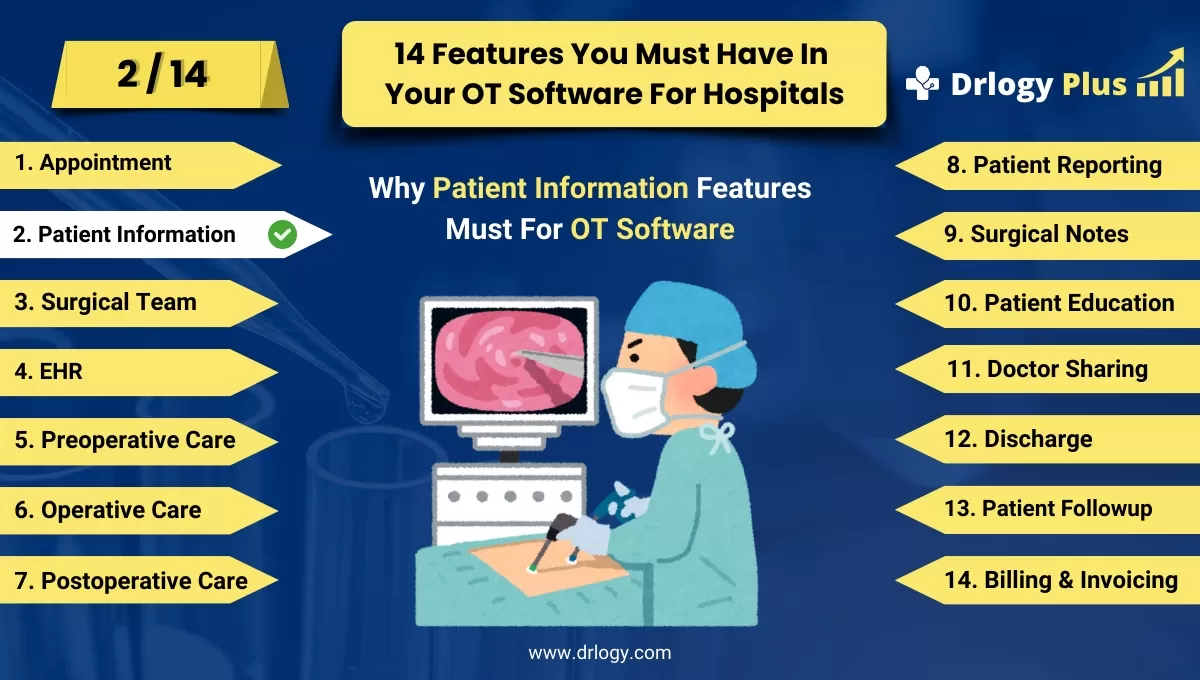
Here are 14 features of Operation Theatre (OT) Management Software for hospitals.
| 1. Appointment | 8. Patient Reporting |
| 2. Patient Information | 9. Surgical Notes |
| 3. Surgical Team | 10. Patient Education |
| 4. EHR | 11. Doctor Sharing |
| 5. Preoperative Checklists | 12. Discharge |
| 6. Operative Preparation | 13. Patient Followup |
| 7. Postoperative Care | 14. Billing and Invoicing |
Summary
Overall, Centralized patient information features in OT management software streamline data access, fostering informed decision-making and enhancing patient safety during surgical procedures.
Check Drlogy OT Management Software Features Guide for efficient inpatient management and enhanced patient care for your clinics and hospitals for patient management.