Drlogy
Healthcare organization
Why Electronic Health Records (EHR) Feature Must In OT Software
Electronic Health Records (EHR) feature in OT management software revolutionizes hospital workflows by digitizing and centralizing patient health information relevant to surgical procedures.
Check:
EHR enhances efficiency, accuracy, and patient safety, fostering seamless communication across departments and optimizing surgical outcomes in hospitals.
Check:
10 Best Electronic Health Records (EHR) Feature For OT Management Software
Check 10 Best Electronic Health Records (EHR) Feature For OT Management Software.
1. Comprehensive Patient Records
- Maintain detailed electronic health records (EHR) for each patient undergoing surgery.
- Include relevant medical history, allergies, medications, and previous surgical procedures.
- Ensure a comprehensive overview of the patient's health status for informed decision-making.
- Enhance patient safety and continuity of care across surgical interventions.
- Facilitate seamless information sharing between OT and other departments.
2. Integration with OT Workflow
- Seamlessly integrate EHR functionalities into the OT management software workflow.
- Allow surgical teams to access patient recordsectly within the OT scheduling and coordination interface.
- Streamline preoperative assessments, intraoperative documentation, and postoperative care planning.
- Reduce the need for duplicate data entry and ensure data consistency.
- Improve efficiency and accuracy in managing patient information during surgical procedures.
3. Customizable Templates and Forms
- Provide customizable templates and forms for capturing specific OT-related data in the EHR.
- Tailor documentation to different surgical specialties, procedures, and protocols.
- Ensure standardized documentation practices while accommodating unique patient needs.
- Improve efficiency by pre-populating common fields and reducing manual data entry.
- Enhance accuracy and completeness of surgical records for clinical decision support and auditing.
4. Real-Time Updates and Alerts
- Enable real-time updates to EHR data during surgical procedures.
- Automatically record vital signs, medication administration, and surgical interventions as they occur.
- Provide immediate alerts for critical events or deviations from expected parameters.
- Enhance situational awareness for surgical teams and support timely interventions.
- Improve documentation accuracy and reduce the risk of errors or omissions.
5. Interoperability with External Systems
- Ensure interoperability with external EHR systems used by referring physicians, specialists, and postoperative care providers.
- Facilitate seamless exchange of patient information, test results, and treatment plans.
- Support continuity of care across healthcare settings and transitions between different care providers.
- Enhance communication and collaboration between OT and other healthcare stakeholders.
- Improve patient outcomes through coordinated and integrated care delivery.
6. Secure Data Storage and Access Controls
- Implement robust security measures to protect EHR data from unauthorized access or breaches.
- Utilize encryption, access controls, and audit trails to safeguard patient confidentiality and integrity.
- Ensure compliance with privacy regulations such as HIPAA to protect sensitive health information.
- Enable-based access permissions to restrict data access based on users and responsibilities.
- Maintain data backups and disaster recovery plans to mitigate the risk of data loss or corruption.
7. Decision Support Tools
- Incorporate decision support tools into the EHR to assist surgical teams in clinical decision-making.
- Provide alerts for potential drug interactions, allergies, or contraindications during surgery.
- Offer evidence-based guidelines and protocols to guide treatment decisions and interventions.
- Support quality improvement initiatives byentifying best practices and adherence to guidelines.
- Enhance patient safety and outcomes through informed and evidence-based care delivery.
8. Mobility and Remote Access
- Enable mobility and remote access to EHR data for surgical teams via mobile devices or tablets.
- Allow surgeons, anesthesiologists, and nurses to review patient records and documentation from anywhere.
- Support collaboration and consultation with remote specialists during complex surgeries.
- Improve workflow flexibility and efficiency by reducing reliance on stationary workstations.
- Enhance team communication and decision-making in time-sensitive situations.
9. Audit Trails and Documentation Integrity
- Maintain audit trails to track changes and access to EHR data for auditing and accountability purposes.
- Ensure the integrity and authenticity of electronic documentation through digital signatures and timestamps.
- Facilitate compliance with regulatory requirements and accreditation standards for medical recordkeeping.
- Enable retrospective analysis of clinical events and documentation practices for quality improvement.
- Enhance trust in EHR data accuracy and reliability among healthcare providers and regulatory agencies.
10. Analytics and Reporting Capabilities
- Leverage analytics and reporting capabilities within the EHR to derive insights from surgical data.
- Generate performance metrics, quality indicators, and outcome measures for OT management.
- Identify trends, patterns, and areas for improvement in surgical care delivery.
- Support research initiatives, benchmarking, and evidence-based practice development.
- Empower decision-makers with insights to optimize OT operations and patient outcomes.
Drlogy OT Management Software Features Guide
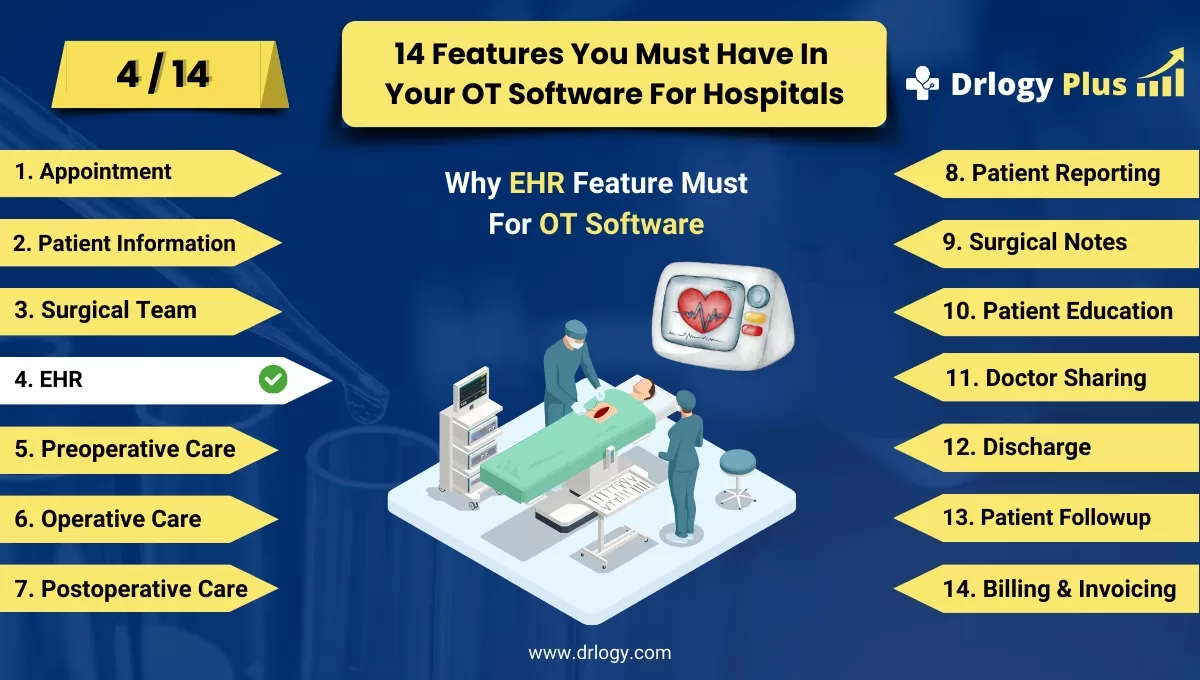
Here are 14 features of Operation Theatre (OT) Management Software for hospitals.
| 1. Appointment | 8. Patient Reporting |
| 2. Patient Information | 9. Surgical Notes |
| 3. Surgical Team | 10. Patient Education |
| 4. EHR | 11. Doctor Sharing |
| 5. Preoperative Checklists | 12. Discharge |
| 6. Operative Preparation | 13. Patient Followup |
| 7. Postoperative Care | 14. Billing and Invoicing |
Summary
Overall, Integration of EHR features into OT management software ensures comprehensive documentation and accessibility of patient health data, bolstering surgical precision and continuity of care in hospital operating theaters.
Check Drlogy OT Management Software Features Guide for efficient inpatient management and enhanced patient care for your clinics and hospitals for patient management.