Drlogy
Healthcare organization
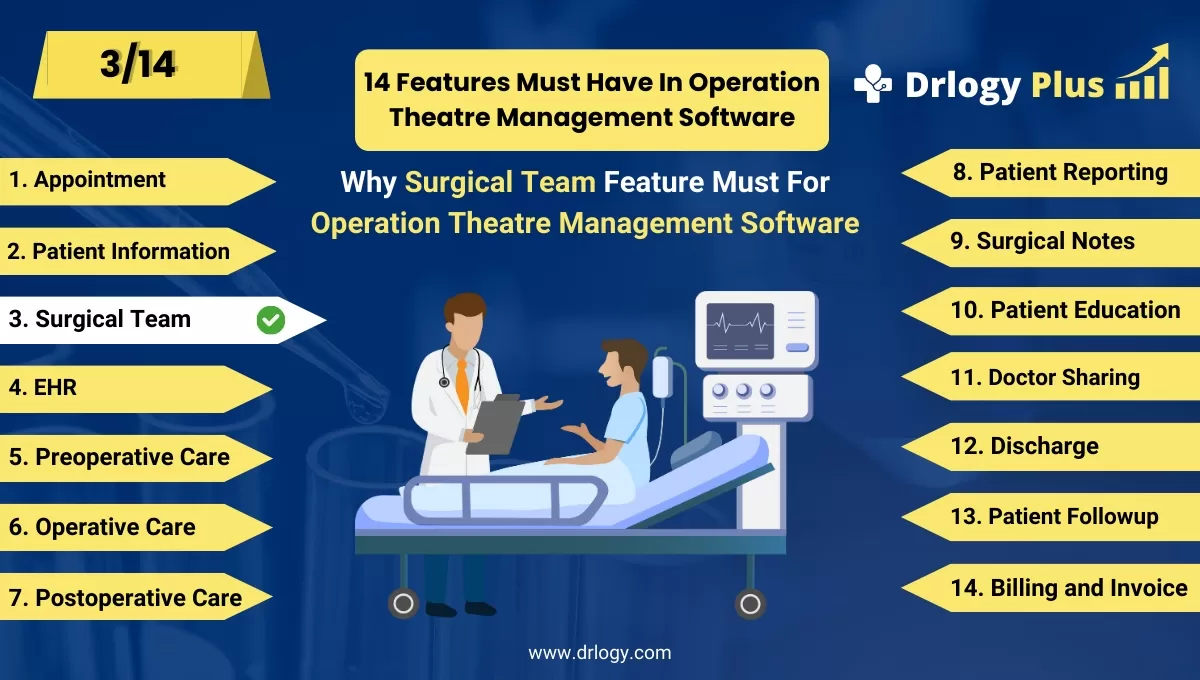
Why Surgical Team Feature Must In Operation Theatre Management Software
Effective coordination and management of the surgical team are critical to ensure smooth and successful operations.
Check:
The right features in Operation Theatre Management Software can enhance collaboration, streamline workflows, and improve surgical outcomes.
Check:
10 Best Surgical Team Features for Operation Theatre Management Software
Check 10 Best Surgical Team Features for Operation Theatre Management Software.
1. Team Availability Scheduling
- The software allows for seamless scheduling by integrating the availability of the surgical team, including surgeons, anesthetists, and nurses.
- Team members can mark their availability, ensuring that the right staff is present for each surgery.
- Alerts notify team members if there are any changes in the schedule, such as rescheduled or canceled surgeries.
- The system provides an overview of all available team members, helping administrators quickly fill ins as needed.
- Efficient scheduling reduces conflicts and ensures that surgeries are staffed appropriately, improving overall workflow.
2. Role-Based Access and Permissions
- The system provides-based access control, ensuring that team members can access only the information relevant to theirs.
- Surgeons, anesthetists, and nurses have personalized dashboards that display tasks and information pertinent to their responsibilities.
- This feature enhances data security by restricting access to sensitive patient information based on the team member’s position.
- Permissions can be adjusted easily to accommodate temporary changes or emergencies, ensuring flexibility.
- It improves collaboration while maintaining privacy and security of patient and procedural data.
3. Team Communication Tools
- The software integrates real-time communication tools, enabling the surgical team to discuss patient status, surgery progress, and urgent updates instantly.
- Secure messaging, voice, or video calls facilitate clear andect communication, reducing errors or misunderstandings.
- Communication logs are stored in the system, ensuring that all interactions are documented for future reference.
- The system can notify team members about important updates, such as patient condition changes or schedule modifications.
- These tools promote seamless collaboration, ensuring timely interventions and smooth operations during surgery.
4. Surgical Procedure Checklists
- The software includes digital checklists for each surgical procedure, ensuring that the surgical team follows all necessary steps.
- Checklists can be customized based on the specific procedure, promoting consistency and adherence to best practices.
- Surgeons, anesthetists, and nurses can check off items as they are completed, reducing the chances of overlooked tasks.
- Alerts are triggered if critical steps are missed or require additional attention.
- These checklists help standardize procedures, improving patient safety and reducing risks.
5. Real-Time Team Status Updates
- The software provides real-time updates on each member’s progress during the surgery, from preparation to completion.
- Surgeons and other team members can instantly notify the rest of the team about any developments, such as delays or complications.
- Status updates allow team members to adjust theirs dynamically based on the evolving needs of the surgery.
- Real-time tracking improves coordination and allows staff to anticipate the next steps, ensuring a smooth and organized procedure.
- This feature enhances team coordination, reduces confusion, and ensures everyone is aligned during the surgery.
6. Surgical Instrument and Equipment Coordination
- The software tracks the availability and allocation of surgical instruments and equipment for each team member during the surgery.
- It ensures that necessary tools are available and ready when needed, reducing delays and improving efficiency.
- The system can automatically alert the team if any equipment requires maintenance or replacement before a scheduled surgery.
- Surgeons and assistants can quickly request tools or make adjustments to the surgical setup through the software.
- This feature improves preparation, reduces equipment-related issues, and ensures that the surgical team has everything they need.
7. Post-Surgery Handover Documentation
- The software facilitates smooth handovers between surgical team members after the operation, ensuring all critical details are passed along to recovery staff.
- Team members can document important information, such as anesthesia used, complications encountered, and post-operative care instructions.
- Handover documentation is stored digitally, ensuring it is accessible by the recovery or ICU teams.
- This ensures that the recovery team is well-informed about the surgery, minimizing the risk of post-operative complications.
- The feature enhances continuity of care by providing the recovery team with complete and up-to-date information.
8. Surgical Team Performance Analytics
- The software tracks and analyzes the performance of each team member based on key metrics like surgery time, complication rates, and adherence to protocols.
- Surgeons, anesthetists, and nurses can receive feedback and suggestions for improving their performance.
- Performance data is used toentify areas for improvement and provide additional training or support to the surgical team.
- Analytics can be compared across different surgeries or team configurations, allowing for improvements.
- These insights help maintain high standards of care and ensure continuous professional development for the surgical team.
9. Team-Based Task Management
- The system assigns tasks to specific members of the surgical team, from preparing the operating room to post-operative monitoring.
- Tasks can be tracked, and notifications are sent to team members when a new task is assigned or completed.
- Surgeons, nurses, and other staff can collaborate seamlessly to ensure all duties are completed on time.
- The software allows team members to update the status of their tasks in real time, reducing the need for manual tracking.
- Task management ensures all critical functions are covered and no steps are missed during the surgery.
10. Surgeon and Staff Preferences Management
- The software stores preferences for each surgical team member, such as preferred surgical positions, instruments, and operating room settings.
- This feature helps accommodate the comfort and efficiency of the surgical team, improving team dynamics.
- Surgeons and staff can customize their working environment, such as adjusting lighting or temperature preferences.
- Preferences are automatically factored into the scheduling and resource allocation process, ensuring a personalized experience for every surgery.
- Managing team preferences enhances satisfaction, reduces stress, and supports a more efficient and comfortable working environment.
Drlogy Operation Theatre Management Software Features Guide
Here are 14 features of Operation Theatre Management Software for hospitals.
| 1. Appointment | 8. Patient Reporting |
| 2. Patient Information | 9. Surgical Notes |
| 3. Surgical Team | 10. Patient Education |
| 4. EHR | 11. Doctor Sharing |
| 5. Preoperative Checklists | 12. Discharge |
| 6. Operative Preparation | 13. Patient Followup |
| 7. Postoperative Care | 14. Billing and Invoicing |
Summary
Overall, Integrating these key surgical team features ensures improved efficiency, better coordination, and enhanced performance in the operating theatre.
Check Drlogy Operation Theatre Management Software Features Guide for efficient inpatient management and enhanced patient care for your clinics and hospitals for patient management.