Drlogy
Healthcare organization
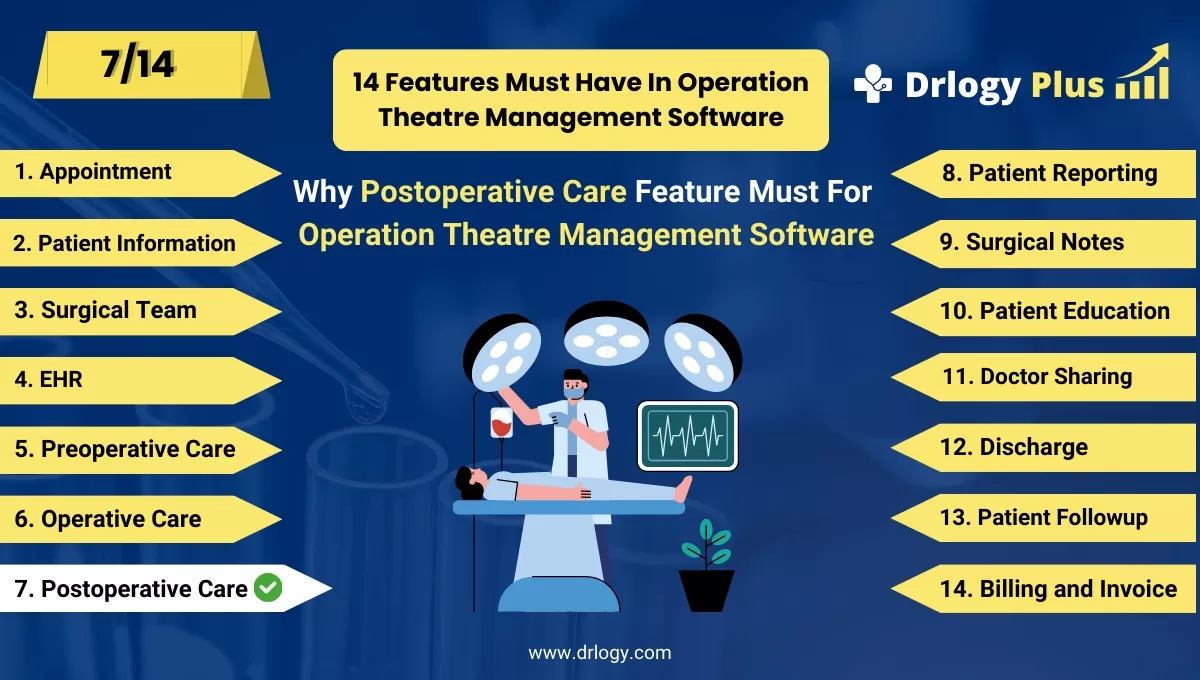
Why Postoperative Care Feature Must In Operation Theatre Management Software
Postoperative care is a critical aspect of surgical recovery, ensuring that patients receive proper monitoring and treatment after surgery.
Integrating postoperative care features in Operation Theatre Management Software helps hospitals track recovery progress, manage complications, and improve patient outcomes efficiently.
Check:
10 Best Postoperative Care Features for Operation Theatre Management Software
Check 10 Best Postoperative Care Features for Operation Theatre Management Software.
1. Post-Surgery Vitals Monitoring
- Tracks patient vitals like heart rate, blood pressure, and oxygen saturation after surgery.
- Alerts medical staff to any abnormal changes in vitals for quick intervention.
- Integrates with monitoring devices for real-time data tracking.
- Ensures that patients remain stable during the recovery period.
- Provides digital logs of vitals for documentation and analysis.
2. Pain Management Tracking
- Allows doctors to track patient pain levels and adjust medications accordingly.
- Ensures that pain relief medications are administered on time.
- Provides alerts for missed or overdue doses.
- Tracks patient feedback on pain relief effectiveness.
- Helps reduce patient discomfort and improve recovery outcomes.
3. Wound Care Management
- Tracks wound healing progress and dressing changes post-surgery.
- Sends reminders for dressing updates and wound inspections.
- Allows nurses to document wound conditions, such as signs of infection.
- Ensures proper hygiene protocols are followed for wound care.
- Helps prevent surgical site infections by maintaining wound care records.
4. Medication Administration Management
- Tracks all prescribed medications for postoperative care.
- Ensures correct dosages and administration times are followed.
- Sends alerts for upcoming or missed medication schedules.
- Provides a digital record of administered drugs for patient safety.
- Helps reduce medication errors and adverse drug reactions.
5. Discharge Planning and Instructions
- Assists in creating personalized discharge plans for patients.
- Provides post-discharge care instructions, including medication and follow-ups.
- Ensures all necessary documentation is complete before discharge.
- Tracks patient readiness for discharge based on recovery progress.
- Helps patients transition smoothly from hospital to home care.
6. Follow-Up Scheduling
- Allows hospitals to schedule follow-up appointments after surgery.
- Sends automated reminders to patients and doctors for upcoming visits.
- Ensures that patients receive continued care after discharge.
- Tracks patient compliance with follow-up schedules.
- Helps improve long-term recovery outcomes by ensuring consistent monitoring.
7. Infection Risk Alerts
- Monitors patient recovery for signs of infections, such as fever or swelling.
- Sends real-time alerts to medical staff if infection risks are detected.
- Tracks the use of antibiotics and infection control measures.
- Ensures that infections are treated promptly to prevent complications.
- Helps hospitals maintain compliance with infection control protocols.
8. Patient Mobility and Rehabilitation Tracking
- Tracks patient mobility progress after surgery.
- Provides rehabilitation plans to help patients regain strength and movement.
- Monitors patient participation in physiotherapy sessions.
- Ensures that patients meet mobility milestones during recovery.
- Helps improve patient outcomes through personalized rehabilitation programs.
9. Postoperative Complications Management
- Tracks potential postoperative complications like bleeding, clotting, or pain.
- Alerts medical staff to any signs of complications for immediate intervention.
- Provides a checklist for managing common complications post-surgery.
- Ensures that patients are monitored for any adverse outcomes.
- Helps improve patient safety by reducing risks during recovery.
10. Patient Feedback and Satisfaction Surveys
- Allows hospitals to gather patient feedback on their postoperative experience.
- Tracks patient satisfaction with pain management, nursing care, and overall recovery.
- Provides insights to improve hospital services and patient care.
- Ensures that patient concerns are addressed promptly.
- Helps hospitals maintain high standards of care through continuous improvement.
Drlogy Operation Theatre Management Software Features Guide
Here are 14 features of Operation Theatre Management Software for hospitals.
| 1. Appointment | 8. Patient Reporting |
| 2. Patient Information | 9. Surgical Notes |
| 3. Surgical Team | 10. Patient Education |
| 4. EHR | 11. Doctor Sharing |
| 5. Preoperative Checklists | 12. Discharge |
| 6. Operative Preparation | 13. Patient Followup |
| 7. Postoperative Care | 14. Billing and Invoicing |
Summary
Overall, Postoperative care features in Operation Theatre Management Software enhance patient safety, streamline recovery processes, and improve overall surgical outcomes through efficient monitoring and management.
Check Drlogy Operation Theatre Management Software Features Guide for efficient inpatient management and enhanced patient care for your clinics and hospitals for patient management.