Drlogy
Healthcare organization
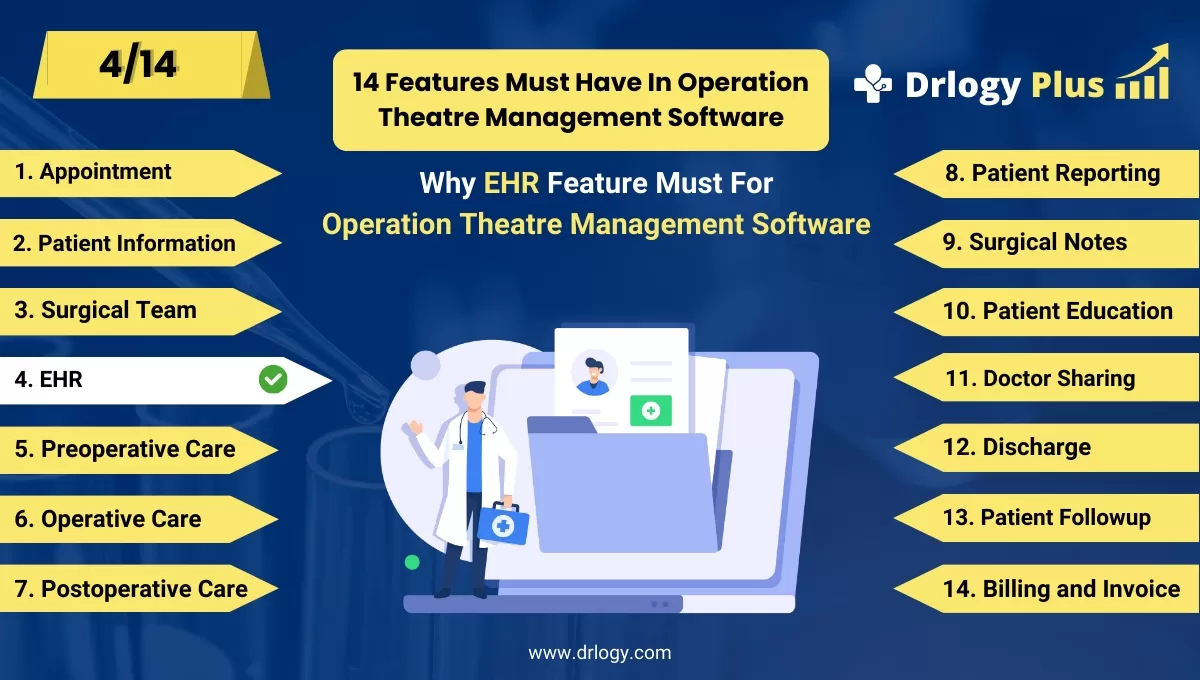
Why EHR Feature Must In Operation Theatre Management Software
Integrating Electronic Health Record (EHR) features into Operation Theatre Management Software is essential for enhancing patient safety, improving surgical outcomes, and streamlining workflows.
Check:
These features allow seamless access to critical patient data, ensuring a well-coordinated, efficient surgical process.
Check:
10 Best EHR Features for Operation Theatre Management Software
Check 10 Best EHR Features for Operation Theatre Management Software.
1. Patient Health History Integration
- The software integrates a patient's complete health history, including past surgeries, diagnoses, allergies, and medications.
- This enables the surgical team to access relevant medical information before, during, and after surgery, ensuring informed decision-making.
- Surgeons can view comprehensive patient data, which helps in planning and tailoring the surgical procedure to the patient’s needs.
- The health history is updated in real-time, ensuring the team always has the latest information.
- A detailed health history improves patient safety byentifying potential complications or contraindications.
2. Real-Time Data Access
- EHR features allow real-time access to patient data, including vitals, lab results, and imaging reports,ectly within the operation theatre.
- Surgeons and anaesthetists can quickly access critical information, reducing delays and enhancing decision-making during surgery.
- The system ensures that data is continuously updated from patient monitoring devices, making it available instantly.
- Real-time data access ensures that the surgical team has the most up-to-date information for better clinical decisions.
- This feature helps prevent errors and improves patient outcomes by enabling timely interventions.
3. Surgical Procedure Documentation
- The EHR system automatically records surgical procedures, including the types of incisions, medications used, and techniques employed.
- Surgeons can document their actions in real-time, ensuring that all aspects of the procedure are captured accurately.
- This documentation is available for future reference, providing a complete record of the surgery for both legal and medical purposes.
- The system allows attaching images, videos, and other diagnostic results to the procedure, improving the comprehensiveness of the record.
- Surgical procedure documentation ensures continuity of care and allows healthcare providers to review patient history thoroughly.
4. Pre-Surgery Risk Assessment
- The EHR system can integrate pre-surgery risk assessments, including lab results and vital health signs, to assess potential surgical risks.
- Pre-operative assessments such as heart conditions, blood pressure, and anesthesia risk can be automatically flagged by the system.
- Surgeons and anaesthetists can access this data before surgery to prepare adequately for any potential complications.
- Risk factors are highlighted in the patient's EHR, which prompts further evaluation and preventive measures.
- Earlyentification of risks ensures that the surgical team is prepared and minimizes the chances of adverse outcomes during the surgery.
5. Anesthesia Management Integration
- The software integrates anesthesia records, tracking drugs administered, dosages, and the patient’s response throughout the procedure.
- Anaesthetists can update anesthesia information in real-time, allowing for immediate adjustments if required.
- The EHR ensures a seamless exchange of data between the anesthesia team and other surgical staff, improving coordination.
- It alerts the team to any allergies or adverse reactions related to anesthesia, enhancing patient safety.
- Comprehensive anesthesia records are stored, improving future care planning and legal documentation.
6. Post-Surgery Recovery Monitoring
- After the surgery, the EHR system tracks the patient's recovery progress, including vital signs, medications, and pain levels.
- The system provides alerts if any post-operative parameters, such as temperature or blood pressure, deviate from the normal range.
- Recovery data is available to the recovery room staff in real-time, ensuring continuous monitoring after surgery.
- Surgeons and anesthesiologists can review post-operative data to ensure smooth recovery and make adjustments as necessary.
- Post-surgery recovery data provides valuable insights for future procedures and helpsentify complications early.
7. Patient Consent and Documentation
- The EHR system stores signed consent forms for surgeries, including specific procedures and anesthesia consents.
- Consent forms are securely stored and easily accessible for review before surgery, ensuring legal compliance and patient understanding.
- The system provides automatic reminders for required consents that need to be completed before the procedure.
- It tracks the consent process, ensuring that all necessary approvals are obtained before the surgery begins.
- This feature ensures that all legal requirements are met, reducing the risk of liability and enhancing patient trust.
8. Clinical Decision Support
- The system provides clinical decision support based on the patient's health data, surgical history, and current condition.
- It offers alerts and recommendations for specific surgical procedures, medications, or post-operative care plans based on evidence-based guidelines.
- Surgeons and anesthesiologists receive real-time notifications if a prescribed treatment might pose a risk due to drug interactions or patient history.
- Clinical decision support ensures that the surgical team follows best practices and reduces the likelihood of errors.
- This feature enhances the quality of care by providing expert-level guidance based on the patient’s specific needs.
9. Integrated Diagnostic Imaging
- The EHR system integrates with imaging systems to display diagnostic images, such as X-rays, MRIs, and CT scans,ectly within the patient’s record.
- Surgeons and radiologists can access high-quality images during surgery preparation, helping them make informed decisions based on the most current data.
- Imaging results can be annotated and linked to specific surgical actions, creating a comprehensive visual record for future reference.
- The system allows for quick retrieval and sharing of images, which improves collaboration and decision-making between different medical teams.
- This integration enhances surgical planning and ensures that relevant diagnostic images are always available during surgery.
10. Interdisciplinary Team Collaboration
- The EHR system promotes collaboration among different healthcare teams, including surgeons, anesthesiologists, nurses, and specialists, through shared patient records.
- Multiple team members can access and update the patient’s record simultaneously, improving coordination and communication.
- Notes, test results, and medication changes are updated in real-time, ensuring that all team members are on the same page.
- This integration supports multidisciplinary care by allowing specialists to contribute insights and recommendationsectly in the patient’s record.
- Interdisciplinary collaboration ensures comprehensive and holistic care for the patient before, during, and after surgery.
Drlogy Operation Theatre Management Software Features Guide
Here are 14 features of Operation Theatre Management Software for hospitals.
| 1. Appointment | 8. Patient Reporting |
| 2. Patient Information | 9. Surgical Notes |
| 3. Surgical Team | 10. Patient Education |
| 4. EHR | 11. Doctor Sharing |
| 5. Preoperative Checklists | 12. Discharge |
| 6. Operative Preparation | 13. Patient Followup |
| 7. Postoperative Care | 14. Billing and Invoicing |
Summary
Overall, Incorporating these EHR features ensures better decision-making, improved patient care, and enhanced surgical efficiency throughout the operation process.
Check Drlogy Operation Theatre Management Software Features Guide for efficient inpatient management and enhanced patient care for your clinics and hospitals for patient management.