Drlogy
Healthcare organization
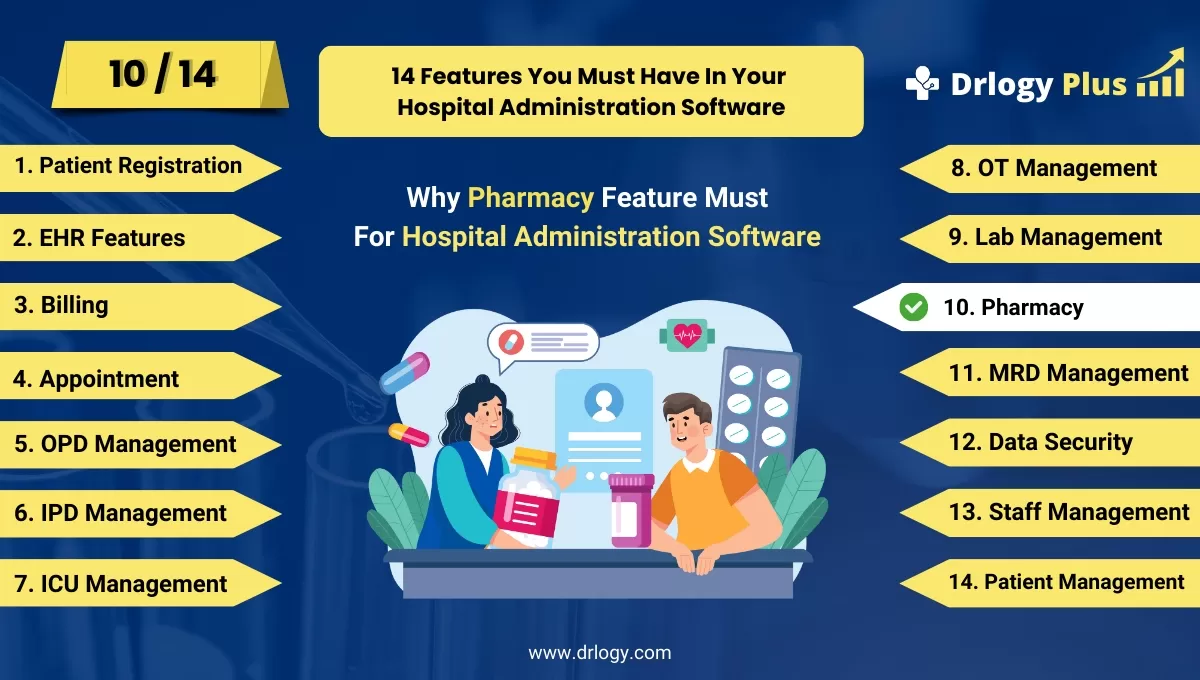
Why Pharmacy Management Features For Hospital Administration Software
Effective pharmacy management features are essential in hospital administration software, particularly for ensuring accurate medication dispensing, patient safety, and compliance with healthcare regulations.
Recommended
These features streamline pharmacy operations, ultimately enhancing overall hospital efficiency and patient care quality.
10 Reasons Why Pharmacy Feature Must For Hospital Administration Software
Here are 10 Reasons Why Pharmacy Management Feature Must For Hospital Administration Software.
1. Efficient Medication Management
- Automated Prescription Handling: Streamlines the process of managing prescriptions, reducing manual errors and ensuring patients receive the correct medication.
- Real-Time Inventory Tracking: Monitors pharmacy stock levels in real time, ensuring that medications are always available when needed and preventing shortages.
- Prescription Refill Management: Automates the management of prescription refills, making it easier to track and fulfill repeat prescriptions efficiently.
- Medication Dispensing Accuracy: Enhances accuracy in dispensing medications by cross-referencing prescriptions with patient records, reducing the risk of errors.
- Batch and Expiry Management: Tracks medication batches and expiration dates, ensuring that only safe and effective drugs are dispensed.
2. Enhanced Patient Safety
- Drug Interaction Alerts: Automatically checks for potential drug interactions when prescribing or dispensing medications, alerting healthcare providers to possible risks.
- Allergy and Contraindication Warnings: Flags any allergies or contraindications in a patient’s history, preventing adverse reactions to prescribed medications.
- Standardized Dosage Guidelines: Provides standardized dosage recommendations based on patient demographics and medical history, ensuring appropriate medication administration.
- Patient Education Tools: Includes tools for educating patients on their medications, promoting safe usage and adherence to prescribed treatment regimens.
- Medication Error Reduction: Reduces the likelihood of medication errors through automated checks and balances at every step of the medication management process.
3. Integration with Electronic Medical Records (EMR)
- Seamless Data Syncing: Ensures that pharmacy data is seamlessly integrated with EMR systems, allowing for real-time updates and access to patient medication records.
- Comprehensive Patient Profiles: Creates comprehensive patient profiles that include medication history, allergies, and current prescriptions, aiding in informed decision-making.
- Streamlined Communication: Facilitatesect communication between the pharmacy and other departments, such as physicians and nursing staff, through the EMR.
- Medication History Tracking: Allows for detailed tracking of a patient’s medication history, improving the continuity of care and reducing the risk of duplicative prescriptions.
- Automated Updates: Ensures that any changes in medication orders are automatically updated in the EMR, reducing the risk of miscommunication.
4. Improved Regulatory Compliance
- Automated Reporting: Generates reports required for regulatory compliance, ensuring that the pharmacy meets all legal and accreditation standards.
- Controlled Substance Management: Provides tools for tracking and managing controlled substances, ensuring compliance with strict regulations.
- Audit-Ready Documentation: Maintains all pharmacy records in an audit-ready state, simplifying the process of responding to regulatory inspections.
- Adherence to Prescribing Guidelines: Ensures that all prescriptions are in line with established prescribing guidelines, reducing the risk of regulatory violations.
- Data Retention Compliance: Manages data retention according to legal requirements, ensuring that pharmacy records are kept for the required duration.
5. Cost Management and Optimization
- Real-Time Cost Analysis: Provides tools for analyzing the costs associated with medications and pharmacy operations in real time, helping toentify cost-saving opportunities.
- Bulk Purchasing Optimization:entifies opportunities for bulk purchasing of medications at reduced costs, optimizing pharmacy inventory expenses.
- Waste Reduction: Tracks medication usage and expiration dates to minimize waste and reduce overall costs.
- Insurance Claim Management: Integrates with insurance systems to streamline the process of submitting and managing claims, ensuring timely reimbursement.
- Budgeting Tools: Offers budgeting tools that help pharmacy managers plan and control expenses more effectively, contributing to overall financial health.
6. Enhanced Inventory Management
- Automated Stock Replenishment: Automatically triggers stock replenishment orders when inventory levels fall below predefined thresholds, ensuring uninterrupted medication availability.
- Inventory Forecasting: Uses historical data and predictive analytics to forecast inventory needs, helping to maintain optimal stock levels and reduce overstocking.
- Barcode Scanning: Integrates barcode scanning for accurate tracking of inventory, reducing manual errors and improving inventory accuracy.
- Expiry Date Management: Continuously monitors the expiration dates of medications, ensuring that expired drugs are removed from inventory and not dispensed.
- Supplier Management: Tracks supplier performance, delivery times, and pricing, helping to optimize procurement strategies and maintain good supplier relationships.
7. Streamlined Billing and Insurance Management
- Automated Billing Integration: Links pharmacy transactionsectly with the hospital’s billing system, ensuring accurate and timely billing for medications dispensed.
- Insurance Eligibility Checks: Automates the process of checking insurance eligibility for medications, ensuring coverage before dispensing.
- Submission and Tracking: Facilitates the submission of claimsectly from the pharmacy system, reducing administrative workload and improving claim turnaround times.
- Patient Copay Management: Automatically calculates patient copays based on insurance coverage, ensuring transparency and accuracy in billing.
- Payment Processing: Integrates with payment processing systems to facilitateect payments from patients or insurers, streamlining the payment process.
8. Enhanced Patient Experience
- Faster Medication Dispensing: Streamlines the medication dispensing process, reducing wait times for patients and improving overall satisfaction.
- Medication Counseling Services: Includes tools for offering personalized medication counseling to patients, enhancing their understanding and adherence to treatment.
- Prescription Notifications: Sends automated notifications to patients when their prescriptions are ready for pickup, improving communication and convenience.
- Patient Portal Access: Allows patients to access their prescription history and request refills through an integrated patient portal, enhancing engagement and satisfaction.
- Customizable Patient Reminders: Offers customizable reminders for patients to take their medications, promoting adherence and improving health outcomes.
9. Data Security and Confidentiality
- Encrypted Data Storage: Ensures that all pharmacy data is encrypted, protecting sensitive patient information from unauthorized access.
- Role-Based Access Control: Implements-based access control, ensuring that only authorized personnel can access or modify pharmacy records.
- Audit Trails: Maintains detailed audit trails of all pharmacy transactions, providing transparency and accountability in medication management.
- HIPAA Compliance: Ensures that all pharmacy processes comply with HIPAA regulations, protecting patient privacy and confidentiality.
- Secure Data Transmission: Uses secure channels for data transmission, ensuring that pharmacy data is protected during communication between systems.
10. Better Collaboration with Healthcare Teams
- Shared Medication Records: Allows healthcare teams to access shared medication records, ensuring that all providers are informed about a patient’s medication regimen.
- Interdisciplinary Communication: Facilitates communication between pharmacists, doctors, and nurses, ensuring that medication-related information is accurately conveyed and acted upon.
- Collaborative Treatment Planning: Supports collaborative treatment planning by providing a unified view of a patient’s medications, aiding in the development of comprehensive care plans.
- Cross-Departmental Coordination: Enhances coordination between the pharmacy and other hospital departments, ensuring that medications are dispensed in alignment with overall treatment plans.
- Medication Reconciliation Support: Provides tools for medication reconciliation during patient transfers, ensuring that all providers are aware of the medications a patient is taking.
Drlogy Hospital Administration Software Features Guide For HMIS
Here are 14 Steps Drlogy Hospital Administration Software Features Guide For HMIS Selection.
| 1. Patient Registration | 8. OT Management |
| 2. EHR Features | 9. Lab Management |
| 3. Billing Management | 10. Pharmacy |
| 4. Appointment | 11. MRD Management |
| 5. IPD Management | 12. Data Security |
| 6. OPD Management | 13. Staff Management |
| 7. ICU Management | 14. Patient Management |
Summary
In summary, Integrating robust pharmacy features into hospital administration software is crucial for improving medication management, enhancing patient safety, ensuring regulatory compliance, and optimizing operational efficiency.
Explore the complete 14 steps Drlogy Hospital Administration Software guide for comprehensive insights into optimizing hospital operations and patient care.