Drlogy
Healthcare organization
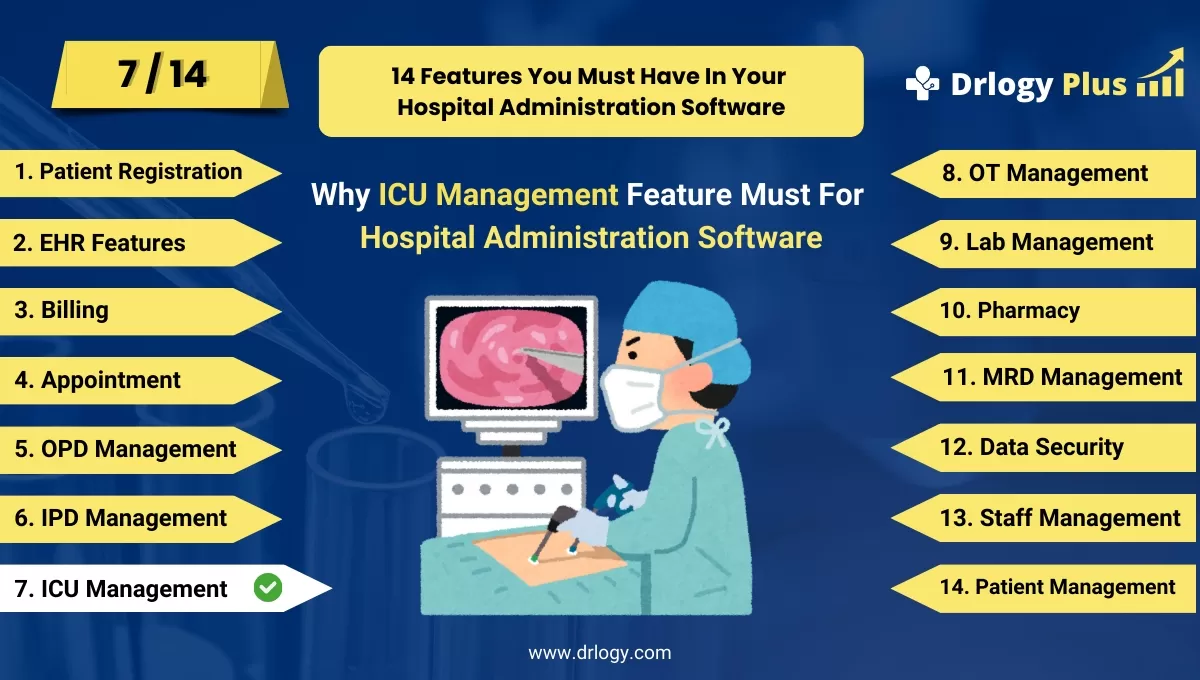
Why ICU Management Features For Hospital Administration Software
The ICU Management feature is vital for delivering high-quality, critical care in a hospital setting.
Recommended
It ensures that Intensive Care Units are managed efficiently, leading to better patient outcomes, streamlined operations, and enhanced safety measures for Hospital Administration Software.
10 Reasons Why ICU Management Feature Must For Hospital Administration Software
Here are 10 Reasons Why ICU Management Feature Must For Hospital Administration Software.
1. Real-Time Patient Monitoring
- Continuous Monitoring: Provides continuous monitoring of vital signs and patient status.
- Critical Alerts: Sends immediate alerts for any critical changes in patient conditions.
- Centralized Dashboard: Displays all ICU patient data in a centralized dashboard for easy access.
- Remote Monitoring: Enables remote monitoring capabilities for off-site medical staff.
- Data Integration: Integrates data from various medical devices for comprehensive monitoring.
2. Efficient Bed Management
- Bed Availability Tracking: Tracks bed availability in real-time, preventing overcrowding.
- Automated Bed Assignment: Automatically assigns beds based on patient acuity and needs.
- Transfer Coordination: Coordinates patient transfers within the hospital or to other facilities.
- Discharge Planning: Supports efficient discharge planning to free up ICU beds for new patients.
- Resource Optimization: Optimizes the use of ICU resources to maximize care delivery.
3. Advanced Treatment Planning
- Customizable Care Plans: Allows for the creation of personalized care plans for each patient.
- Multi-Disciplinary Collaboration: Facilitates collaboration among various specialists for comprehensive care.
- Treatment Protocols: Supports standardized treatment protocols for critical care management.
- Medication Management: Integrates with pharmacy systems for precise medication administration.
- Procedure Scheduling: Manages scheduling of procedures and interventions within the ICU.
4. Comprehensive Documentation
- Digital Record Keeping: Maintains accurate and up-to-date digital records of all patient interactions.
- Automated Data Entry: Reduces manual documentation through automated data entry from medical devices.
- Compliance Reporting: Ensures compliance with healthcare regulations through thorough documentation.
- Audit Trails: Provides audit trails for all actions and changes in patient care plans.
- Legal Documentation: Facilitates the management of consents, DNR orders, and other legal documents.
5. Effective Communication Tools
- Multi-Channel Communication: Supports communication between doctors, nurses, and family members via multiple channels.
- Critical Notifications: Sends critical updates and notifications to relevant staff members instantly.
- Patient Family Updates: Provides a structured way to keep patient families informed about their loved one's status.
- Inter-Department Coordination: Ensures seamless communication between the ICU and other hospital departments.
- Shift Handover: Facilitates efficient shift handovers with detailed patient status updates.
6. Resource and Inventory Management
- Medical Supply Tracking: Tracks and manages inventory of critical medical supplies and equipment.
- Equipment Maintenance: Schedules and monitors maintenance of ICU equipment to ensure functionality.
- Staff Allocation: Allocates nursing and support staff based on patient load and care needs.
- Emergency Resource Planning: Prepares for emergencies with an organized resource management system.
- Inventory Reordering: Automates reordering of supplies to avoid shortages in critical situations.
7. Enhanced Data Security
- Patient Data Protection: Implements advanced encryption and access controls to protect sensitive patient information.
- Secure Data Sharing: Facilitates secure sharing of patient data among authorized personnel only.
- Compliance with Standards: Ensures that all data handling meets healthcare industry standards.
- User Authentication: Requires multi-factor authentication for access to ICU management systems.
- Audit Logs: Maintains detailed logs of data access and modifications for security audits.
8. Advanced Reporting and Analytics
- Outcome Analysis: Provides tools for analyzing patient outcomes and treatment effectiveness.
- Performance Metrics: Tracks ICU performance metrics toentify areas for improvement.
- Real-Time Data: Offers real-time analytics for making informed decisions in critical situations.
- Customizable Reports: Generates customizable reports for clinical and administrative purposes.
- Data-Driven Insights: Uses insights to optimize ICU operations and patient care.
9. Patient Safety Features
- Critical Care Protocols: Enforces adherence to critical care protocols to enhance patient safety.
- Infection Control: Monitors and manages infection control measures within the ICU.
- Error Reduction: Minimizes human error through automated checks and balances in patient care.
- Safety Alerts: Provides safety alerts for potential hazards such as medication interactions.
- Compliance Monitoring: Continuously monitors compliance with safety regulations and guidelines.
10. Improved Patient Outcomes
- Timely Interventions: Ensures timely interventions through efficient management of patient care.
- Personalized Care: Delivers personalized care based on real-time data and analytics.
- Quality of Care: Enhances the quality of care provided in the ICU, leading to better patient outcomes.
- Reduced Mortality Rates: Contributes to lowering mortality rates through efficient and effective ICU management.
- Continuous Improvement: Facilitates continuous improvement in patient care through data analysis and feedback.
Drlogy Hospital Administration Software Features Guide For HMIS
Here are 14 Steps Drlogy Hospital Administration Software Features Guide For HMIS Selection.
| 1. Patient Registration | 8. OT Management |
| 2. EHR Features | 9. Lab Management |
| 3. Billing Management | 10. Pharmacy |
| 4. Appointment | 11. MRD Management |
| 5. IPD Management | 12. Data Security |
| 6. OPD Management | 13. Staff Management |
| 7. ICU Management | 14. Patient Management |
Summary
In summary, A well-integrated ICU Management feature is essential for enhancing patient safety, optimizing resource use, and improving patient outcomes in critical care settings.
Explore the complete 14 steps Drlogy Hospital Administration Software guide for comprehensive insights into optimizing hospital operations and patient care.