Drlogy
Healthcare organization
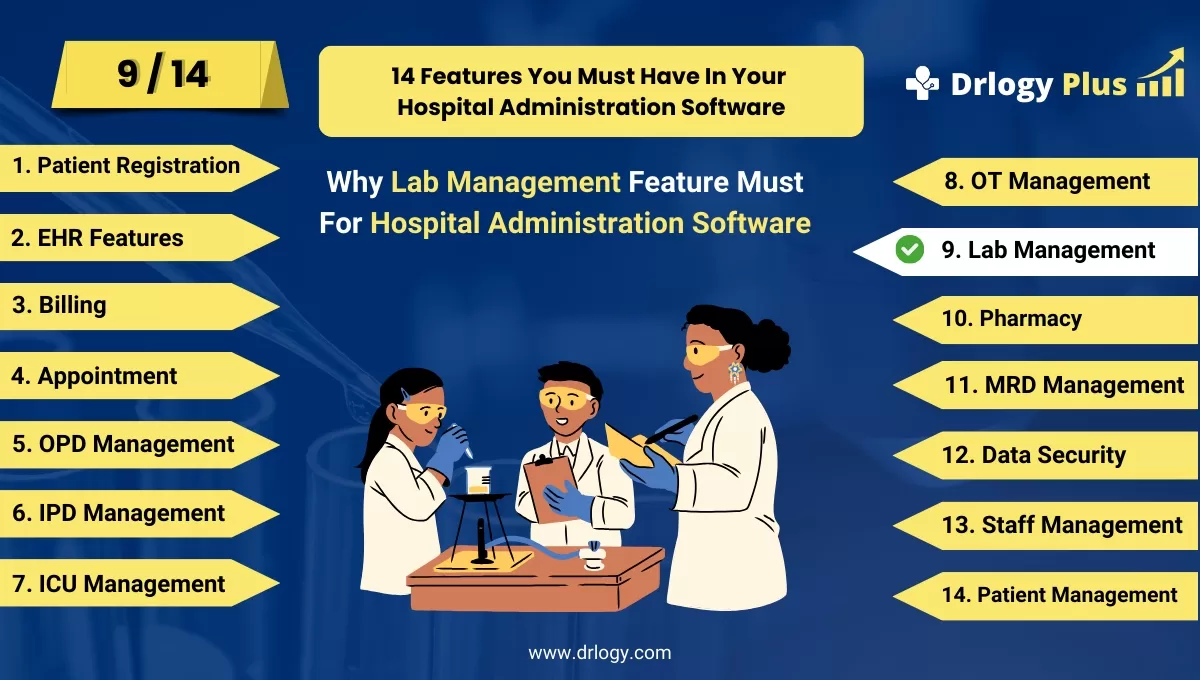
Why Lab Management Features For Hospital Administration Software
Lab management features are crucial for hospital administration software, as they streamline laboratory operations, improve accuracy, and ensure compliance with regulatory standards.
Recommended
These features enhance overall efficiency, leading to better patient care and optimized resource management.
10 Reasons Why Lab Management Feature Must For Hospital Administration Software
Here are 10 Reasons Why Lab Management Feature Must For Hospital Administration Software.
1. Streamlined Workflow Management
- Automated Lab Processes: Lab management features automate routine tasks such as test ordering and result entry, reducing manual effort and minimizing errors.
- Integrated Scheduling: Allows for efficient scheduling of lab tests and procedures, ensuring optimal use of laboratory resources and reducing patient wait times.
- Centralized Data Access: Provides a centralized platform where lab results and patient data are easily accessible to authorized personnel, improving coordination between departments.
- Enhanced Communication: Facilitates seamless communication between lab technicians, doctors, and nurses, ensuring that critical information is shared promptly.
- Task Prioritization: Helps prioritize lab tasks based on urgency, ensuring that critical tests are processed and results are delivered without delay.
2. Improved Accuracy and Precision
- Minimized Human Error: Automated data entry and processing reduce the risk of human error, ensuring that lab results are accurate and reliable.
- Standardized Protocols: Enforces standardized testing protocols, ensuring consistency and accuracy across all lab procedures.
- Automated Quality Control: Includes built-in quality control checks that monitor test accuracy and detect any deviations from standard practices.
- Error Alerts: Generates alerts when discrepancies or errors are detected, allowing for immediate corrective action and maintaining the integrity of lab results.
- Data Validation: Validates lab data before it is recorded, ensuring that all entries meet predefined accuracy standards.
3. Enhanced Data Security
- Secure Data Storage: Ensures that all lab data is stored securely within the hospital’s database, protecting it from unauthorized access or breaches.
- Access Control: Implements-based access control, ensuring that only authorized personnel can access sensitive lab data.
- Data Encryption: Encrypts lab data during transmission and storage, ensuring that it remains secure from potential cyber threats.
- Audit Trails: Maintains detailed audit trails of all lab activities, allowing administrators to track who accessed or modified data, enhancing transparency.
- Regular Backups: Automates regular backups of lab data, ensuring that it can be recovered in the event of data loss or corruption.
4. Comprehensive Reporting and Analytics
- Customizable Reports: Allows hospital administrators to generate customized reports that provide insights into lab operations, such as test volumes and turnaround times.
- Trend Analysis: Analyzes lab data over time toentify trends and patterns, helping to predict future demand and optimize resource allocation.
- Performance Metrics: Tracks key performance metrics, such as test accuracy and technician efficiency, enabling continuous improvement.
- Compliance Reporting: Generates reports required for regulatory compliance, ensuring that the hospital meets all legal and accreditation standards.
- Visual Dashboards: Provides visual dashboards that present lab data in an easy-to-understand format, facilitating quick decision-making.
5. Increased Operational Efficiency
- Reduced Turnaround Time: Streamlines lab processes, reducing the time it takes to complete tests and deliver results to clinicians.
- Resource Optimization: Optimizes the use of laboratory equipment and personnel, reducing operational costs and improving efficiency.
- Automated Inventory Management: Monitors lab inventory levels in real-time, ensuring that necessary supplies are always available and reducing waste.
- Workflow Automation: Automates repetitive tasks, such as sample tracking and result entry, freeing up staff to focus on more critical activities.
- Capacity Management: Manages lab capacity by analyzing incoming test orders and adjusting workflows to prevent bottlenecks.
6. Enhanced Patient Care
- Faster Diagnosis: Quicker lab results contribute to faster diagnosis and treatment, improving patient outcomes.
- Improved Patient Communication: Provides patients with timely updates on their lab results, enhancing communication and reducing anxiety.
- Patient Portal Integration: Integrates with patient portals, allowing patients to access their lab results online, improving convenience and transparency.
- Personalized Care: Uses lab data to tailor treatments to individual patient needs, ensuring more effective and personalized care.
- Continuous Monitoring: Enables continuous monitoring of lab results over time, allowing for early detection of health issues and proactive intervention.
7. Regulatory Compliance and Standards
- Automated Compliance Checks: Ensures that all lab processes comply with regulatory standards, reducing the risk of non-compliance.
- Standardized Documentation: Maintains standardized documentation for all lab procedures, ensuring that records are consistent and accurate.
- Accreditation Support: Provides tools to support accreditation processes, helping hospitals maintain or achieve necessary certifications.
- Audit-Ready Records: Keeps all lab records in an audit-ready state, making it easier to respond to inspections or audits.
- Data Integrity: Ensures that lab data is complete, accurate, and secure, meeting the highest standards of data integrity required by regulators.
8. Seamless Integration with Other Hospital Systems
- EMR Integration: Integrates with Electronic Medical Records (EMR) systems, allowing lab results to be automatically updated in patient records.
- Billing System Integration: Connects lab management with billing systems, ensuring that all tests are accurately billed and reducing administrative errors.
- Clinical Workflow Integration: Seamlessly integrates lab management with other clinical workflows, such as inpatient and outpatient care, enhancing overall hospital efficiency.
- Pharmacy Integration: Facilitates communication between the lab and pharmacy, ensuring that lab results are immediately available for medication decisions.
- Radiology Integration: Connects lab and radiology departments, ensuring that relevant test results are shared across departments for comprehensive patient care.
9. Cost Management and Control
- Resource Utilization Tracking: Monitors the use of lab resources, helping toentify areas where costs can be reduced without compromising quality.
- Budgeting Tools: Provides budgeting tools that allow administrators to plan and manage lab-related expenses more effectively.
- Cost-Effective Testing:entifies cost-effective testing methods that meet clinical needs while minimizing expenses.
- Inventory Cost Management: Reduces inventory costs by optimizing supply orders and minimizing wastage through real-time inventory tracking.
- Financial Reporting: Generates detailed financial reports on lab operations, providing insights into cost-saving opportunities and financial performance.
10. Enhanced Collaboration Across Departments
- Inter-Departmental Communication: Facilitates better communication and collaboration between the lab and other hospital departments, such as oncology, surgery, and emergency care.
- Shared Access to Lab Results: Ensures that lab results are easily accessible to all relevant departments, enabling coordinated care for patients.
- Collaboration Tools: Provides tools for cross-departmental collaboration on complex cases, ensuring that lab results are interpreted in the broader context of patient care.
- Multidisciplinary Team Support: Supports multidisciplinary teams by providing them with access to lab data and results, fostering a team-based approach to patient care.
- Integrated Care Pathways: Integrates lab results into care pathways, ensuring that all departments involved in a patient’s care are informed and aligned in their treatment approach.
Drlogy Hospital Administration Software Features Guide For HMIS
Here are 14 Steps Drlogy Hospital Administration Software Features Guide For HMIS Selection.
| 1. Patient Registration | 8. OT Management |
| 2. EHR Features | 9. Lab Management |
| 3. Billing Management | 10. Pharmacy |
| 4. Appointment | 11. MRD Management |
| 5. IPD Management | 12. Data Security |
| 6. OPD Management | 13. Staff Management |
| 7. ICU Management | 14. Patient Management |
Summary
In summary, Lab management features in hospital administration software are essential for optimizing lab operations, improving patient care, and ensuring regulatory compliance, ultimately enhancing overall hospital efficiency and effectiveness.
Explore the complete 14 steps Drlogy Hospital Administration Software guide for comprehensive insights into optimizing hospital operations and patient care.