Drlogy
Healthcare organization
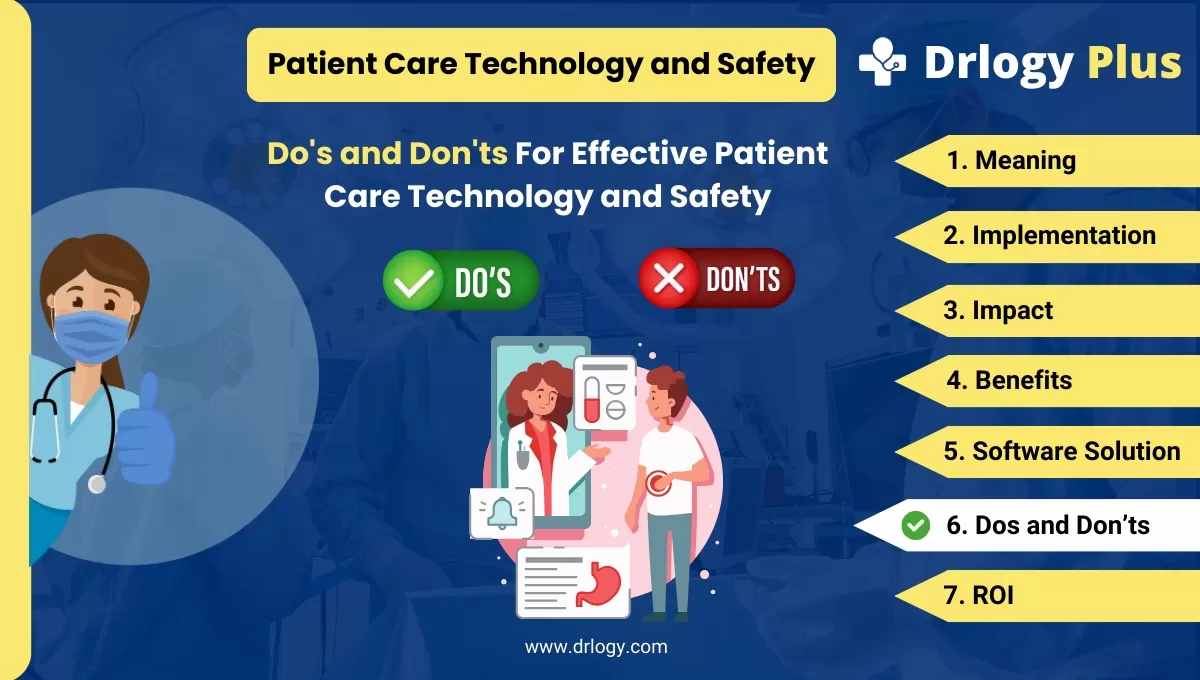
Patient Care Technology and Safety: Do's and Don'ts
Effectively managing Patient Care Technology and Safety involves adhering to essential dos to build trust and credibility, steering clear of potential don'ts that may jeopardize your online image. These guidelines are pivotal for upholding a positive and professional online presence.
Recommended
- The Best Clinic Software for better Clinic Management
Patient Care Technology and Safety Do's:
Here are some do's for Patient Care Technology and Safety:
- Training and Education: Do provide comprehensive training for healthcare professionals on the proper use of patient care technology. This includes regular updates to keep them informed about new features and updates.
- User-Friendly Interfaces: Do prioritize user-friendly interfaces for all patient care technology. Intuitive design can reduce the likelihood of errors and improve overall efficiency in healthcare delivery.
- Interoperability: Do ensure that patient care technologies are interoperable with existing systems. Seamless integration between different technologies and electronic health records (EHRs) enhances communication and reduces the risk of errors.
- Data Security: Do implement robust security measures to protect patient data. This includes encryption, access controls, and regular security audits to prevent unauthorized access and protect patient confidentiality.
- Regular Maintenance and Updates: Do schedule regular maintenance and updates for all patient care technology to ensure optimal performance and security. Outdated systems can be more prone to errors and vulnerabilities.
- Clinical Decision Support: Do integrate clinical decision support tools to assist healthcare professionals in making informed decisions. These tools can provide evidence-based information and help prevent medical errors.
- Patient Involvement: Do involve patients in the use of technology related to their care. Educate them on how to use relevant tools, such as patient portals, to access their health information and actively participate in their care.
- Feedback Mechanism: Do establish a feedback mechanism for healthcare professionals to report issues or concerns related to patient care technology. This helps inentifying and addressing issues promptly.
- Compliance with Regulations: Do ensure that all patient care technologies comply with relevant healthcare regulations and standards. This includes adherence to data protection laws and industry-specific guidelines.
- Continual Improvement: Do foster a culture of continual improvement. Regularly assess the effectiveness and safety of patient care technologies, gather feedback, and make necessary adjustments to enhance overall performance.
Recommended
Cost-Free Listing for Clinics to Visible Expertise & Reach Millions of Patients
Patient Care Technology and Safety Dont's:
Here are some don'ts for Patient Care Technology and Safety.
- Ignoring User Input: Don't implement patient care technology without consulting healthcare professionals, risking systems that don't align with clinical needs.
- Overlooking Training: Don't skip comprehensive training, as inadequate preparation can lead to technology misuse and compromise patient safety.
- Neglecting Interoperability: Don't invest in non-interoperable technologies, which can hinder communication between departments and lead to fragmented care.
- Compromising Data Security: Don't compromise on data security measures, risking unauthorized access and potential breaches of sensitive patient information.
- Ignoring Updates and Maintenance: Don't neglect regular updates and maintenance, as outdated systems can become vulnerable and less reliable.
- Relying Solely on Technology: Don't rely solely on technology; maintain a balance with human judgment to ensure clinical expertise remains central.
- Overlooking Patient Education: Don't overlook educating patients about technology, as lack of understanding can lead to confusion and non-compliance.
- Ignoring Regulatory Compliance: Don't disregard healthcare regulations, as non-compliance can result in legal and ethical issues, compromising patient safety.
- Failing to Address Technical Glitches Promptly: Don't ignore or delay fixing technical glitches, as prompt resolution is critical to prevent disruptions in patient care.
- Lacking a Culture of Continuous Improvement: Don't foster a stagnant environment; without commitment to continuous improvement, optimization of patient care technology may be hindered.
Patient Care Technology and Safety Do's vs Don'ts
Here are summary of above comparison of Patient Care Technology and Safety Do's vs Don'ts.
| Patient Care Technology and Safety Do's | Patient Care Technology and Safety Don'ts |
|---|---|
| 1. Training and Education | 1. Ignoring User Input |
| 2. User-Friendly Interfaces | 2. Overlooking Training |
| 3. Interoperability | 3. Neglecting Interoperability |
| 4. Data Security | 4. Compromising Data Security |
| 5. Regular Maintenance and Updates | 5. Ignoring Updates and Maintenance |
| 6. Clinical Decision Support | 6. Relying Solely on Technology |
| 7. Patient Involvement | 7. Overlooking Patient Education |
| 8. Feedback Mechanism | 8. Ignoring Regulatory Compliance |
| 9. Compliance with Regulations | 9. Delayed Technical Resolution |
| 10. Continual Improvement | 10. No Continuous Improvement |
Patient Care Technology and Safety
Here are 7 main Patient Care Technology and Safety Guide Strategies.
| 1. Meaning | 2. Implementation |
| 3. Impact | 4. Benefits |
| 5. Software Solution | 6. Dos and Don’ts |
| 7. ROI |
Summary
In summary, Patient Care Technology and Safety helps build trust and credibility with patients, while adhering to the don'ts safeguards against potential pitfalls that can damage your online image and practice reputation.
Check Drlogy Plus Academy to get all answers related to hospitals, labs, clinics and patient management with all in one solution.